Why Does My Bra Roll Up Under The Bust?
If your bra feels fine when you first put it on but starts rolling, curling, or folding under your bust as the day goes on, you are not imagining it. A bra rolls up under the bust when the band stops staying flat and steady against your body, usually because it is too loose, too tight, worn out, or because the cups or bra design are not supporting your bust in the way you need.
This is one of those fit problems that can seem small at first and become very annoying by lunchtime. It is common, but it is not something you should have to accept as normal.
For many women dealing with bra fit issues, especially fuller-bust shoppers, larger cup sizes, or anyone who has a harder time finding a steady band and cup match, this kind of rolling is a useful clue that something about the bra is off. It can affect comfort, support, and how secure the bra feels through the day, which is why it is worth figuring out instead of just tugging the band back down.
The most important thing to know is this: your body is not the problem. Rolling under the bust usually means the bra’s size, cup fit, shape, construction, or condition is not matching how you need support in real life. Often, it is a combination of band fit, bra cups, style construction, and elastic wear.
The goal is not to chase one perfect fit that works for every body. The goal is to understand what your bra is telling you so you can find a better starting point.
Why Bra Curling Happens Under The Bust

The band is the anchor of the bra. It should usually sit level around the body and feel firm enough to hold the bra in place without digging, flipping, or sliding.
When the bottom edge of the band rolls up, the bra may be losing that anchor. The band might be shifting because it is stretched out, too loose, too tight in the wrong place, too wide for your torso, or not structured enough for your bust. The cups can also contribute. If the cups are too shallow, too small, or sitting too low, they may push the bra out of position and make the band work harder than it should.
That is why sizing up in the band is not always the answer. It may help in some cases, but in others it can make the bra move even more.
A good first step is to look at where the rolling happens.
First, Notice Where The Bra Is Rolling
Before changing sizes, notice what the bra is actually doing. A band that rolls in the front can point to a different issue than a band that folds at the sides or rides up in the back.
Rolling In The Front
If the bra rolls directly under the bust in the front, the bottom edge of the band may be curling into the underbust crease. This can happen when the band edge is too soft, too narrow, too stretched out, or too firm against your body.
Front rolling can also happen when the cups are not giving your breast tissue enough room. If the cups are too shallow or too small, the bust may push downward or outward, creating pressure that makes the band fold under the bust.
Check whether the wire or lower cup is sitting close to the natural crease under your breast. If the bra is sitting too low, the band may collapse instead of staying flat.
Rolling At The Sides
If the rolling happens more at the sides, look at the side wing and band height. A taller side wing can be helpful for smoothing and support, but only if it matches your torso and sits comfortably. On some bodies, a wide or tall band may fold when you sit, bend, or move.
Side rolling can also be a sign that the band is too tight through one area, too loose overall, or stretched unevenly from wear.
When The Bra Rides Up In The Back
If the back of the band is not just folding but actually moving upward, that is a slightly different fit problem. A back band that rides up often means the band is not anchoring securely around the body.
For that issue, read why your bra band rides up so you can compare the two symptoms.
Rolling under the bust is usually about the band edge curling or folding. Riding up is usually about the band moving upward and losing its level position.
Check The Band First

Because the band does much of the support work, it is the first place to check.
A well-fitting band should usually feel snug and steady on the loosest comfortable hook when the bra is newer. It should sit level around your body without creeping up, flipping, or curling. You should be able to move comfortably, but the band should not feel so loose that it shifts when you raise your arms.
Here are the main band issues that can cause rolling.
How A New Bra Should Sit Flat
A new bra should usually sit flat on the loosest comfortable hook. That gives the elastic room to relax over time while still keeping the band steady.
Some bra fit tips talk about sliding two fingers under the band. That can be a rough comfort check, but it is not the whole story. The better question is whether the band can lay flat and stay level while you move, breathe, sit, and raise your arms.
The band should feel secure, not like it is squeezing your ribs or floating away from your body. The idea is not to make the band as tight as possible. The idea is to find a steady anchor that works with the cups and the bra style.
The Band May Be Too Loose
A loose band may not hold its place. When the band moves around, the bottom edge can start to fold or bunch instead of staying flat against the body.
Signs the band may be too loose include:
-
The back of the band rides up.
-
You need to tighten the straps to feel supported.
-
The bra shifts when you raise your arms.
-
The cups seem to move away from the body during the day.
-
The band feels better on the tightest hook even when the bra is not old.
If this sounds familiar, a firmer band or smaller band size may be worth trying. Just remember that changing the band affects the cup fit too, so it is often best to check the whole bra rather than changing only one number.
The Band May Be Too Tight
A tight band can also roll. This surprises a lot of women because rolling is often assumed to mean the band is loose.
If the band is too tight, the elastic may dig in and curl, especially along the bottom edge. A firm band that does not match your ribcage, torso shape, or underbust area may flip instead of lying flat.
Signs the band may be too tight include:
-
The bottom edge digs sharply.
-
The band feels restrictive even on the loosest hook.
-
The bra leaves deep marks on the skin quickly.
-
You feel relief as soon as you take it off.
-
The band curls in the same place every time you wear it.
A band should feel firm, but it should not feel like it is fighting your body. Sometimes the solution is a different band size. Other times, the better answer is a different band shape, softer edge, or style with better structure.
The Band May Be Worn Out
If a bra used to fit well but now rolls under the bust, age may be the issue.
Elastic changes over time, especially with frequent wear and washing. A band can stretch out, lose recovery, or curl at the edge, even if the bra used to fit well. Once the elastic no longer snaps back, the bra may not stay flat even if the original size was right.
Lay the bra flat and look at the bottom band before putting it on. If the edge is already curled, rippled, stretched, or wavy, the bra may simply be tired.
For more guidance on checking the full fit of a bra, use our practical bra fit checklist.
Check The Bra Cups Too

A rolling band is not always a band problem. The bra cups may be pushing the bra out of position.
The band and cups work together. If the cups are not right, the band may end up compensating.
Cups That Are Too Small Or Too Shallow
If the cups do not have enough depth, breast tissue may press against the cup and push the lower part of the bra downward. That pressure can make the band fold under the bust.
Look for signs like:
-
Spillage at the top or sides of the cup.
-
Gaping in one area while another area feels tight.
-
The cup flattening your shape.
-
The center gore not sitting close in an underwire bra.
-
The wire sitting on breast tissue.
-
The bra feeling lower on the body as the day goes on.
In this case, going up in the band may not fix the issue. You may need a different cup size, a deeper cup shape, or a style that better matches your breast tissue.
Cups That Sit Too Low
A bra should usually sit in the crease where the breast meets the body. If the bra is sitting too low, the band may collapse under the bust instead of supporting from the right position.
This can happen when the cups are too shallow, the wires are the wrong shape, or the band has loosened enough that the whole bra drops.
Try adjusting the bra fully before judging it. Put the bra on, fasten it comfortably, then gently scoop and settle your breast tissue into the cups. Check whether the lower cup and wire are sitting close to your natural breast root.
In an underwire bra, also look at the center gore, sometimes called the centre front in fitting conversations. It should usually sit close to the body without pressing painfully, floating far away, or resting on breast tissue.
If everything drops again after a short time, the bra may not be giving you enough structure or cup depth.
When Bra Straps And Shoulders Are Part Of The Clue
Bra straps are usually not the main reason a band rolls under the bust, but they can give you clues.
If you keep tightening the straps to pull the bra up, the shoulders may start carrying too much weight. That can make the cups tilt, the band shift, or the lower edge curl. If the straps slip, dig, or feel like they are doing all the work, check the band and cups before assuming the straps are the whole problem.
A steadier band and better cup match often help the straps behave better too.
Sizing Questions To Ask Before You Change Your Bra Size

A rolling band can make you wonder whether you are wearing the wrong bra size. That may be true, but size is only one part of the fit.
Before choosing a new bra size, ask a few practical sizing questions:
-
Does the band sit flat on the loosest comfortable hook?
-
Does the band pull upward in the back?
-
Do the cups contain the breast tissue without spilling or gaping?
-
Does the wire or lower cup sit close to the natural breast crease?
-
Does the center gore or centre front sit close without pressing uncomfortably?
-
Do the straps stay steady without taking over the support?
-
Does the bra feel worse after sitting, bending, or moving?
A measuring tape can offer a starting point, especially if your size has changed or you are comparing brands. But a measure is not a guarantee of a perfect fit. Your measurements may place you in a starting range, while the right size still depends on the brand, cup shape, band stretch, and bra style.
Our bra size chart can help with starting points, but the way the bra fits on your body is the real test.
Is It The Wrong Bra Size Or The Wrong Bra Style?
Sometimes a rolling band does point to the wrong bra size. The band may be too loose to anchor, or it may be too tight and curling into the body.
Other times, the printed size is close, but the style is not right for your shape. A longline band may roll when you sit. A soft wireless bra may not have enough structure. A shallow cup may push the band downward even if the band size is reasonable.
That is why it helps to check the size and the style together.
The Right Size Should Still Let The Band Sit Flat
The right bra size should help the band sit flat and feel steady, but it should not make the bra feel rigid, painful, or impossible to wear.
Even the correct bra size can feel wrong if the cup shape is too shallow, the band edge is too firm, the fabric has stretched out, or the bra was not designed with enough support features for your bust.
Think of size as the starting point. Fit is the full picture.
Style Construction Matters

Two bras in the same printed size can behave very differently. Band width, elastic strength, fabric, seams, cups, wires, and side wings all affect whether a bra stays flat.
That is why one style may roll while another feels steady, even if the size label is the same.
Wireless Bras And Soft Bands
Wireless bras can be a wonderful option for softness and everyday comfort, but they still need structure. For fuller busts especially, a wireless bra usually needs support through the band, cups, fabric, seams, or inner panels.
If a wireless bra rolls up under the bust, the band may be too soft, too narrow, or too stretchy for the amount of support you need. The cups may also be letting the bust sit too low, which can make the underband fold.
A soft bralette can feel like a second skin, but if the band has very little structure, it may not stay flat through a full day of wear. That does not mean wireless bras cannot work for you. It means the construction matters.
Read more about what to look for in wireless bras with support if you like the feel of wireless styles but need more stability.
Longline Bras And Wider Bands
A wider band can feel supportive, but it also has more fabric that needs to fit your torso. If the band is too long for the space between your bust and waist, it may roll when you sit or bend.
Longline bras, bralettes, and wide comfort bands can roll for this reason. The style may be soft and pretty on the hanger, but the band still needs to match your body and movement.
If a longline style rolls every time you sit, you may do better with a shorter band, firmer elastic, or a different shape through the underbust.
Underwire Bras
An underwire bra can still roll under the bust if the cup shape, wire width, or band construction is not matching you well.
In an underwire bra, check whether the wire is sitting around the breast tissue rather than on it. If the wire is too narrow, too wide, too low, or floating away from the body, the lower part of the bra may not sit where it should.
A good underwire fit should usually feel stable through the band and lower cup, not like the wire and band are shifting around during the day.
Is It The Same As Your Bra Band Riding Up?
Rolling under the bust and riding up in the back are related, but they are not exactly the same.
A bra rolling under the bust usually means the lower edge of the band is curling, folding, or flipping. This often happens in the front or sides.
A bra band riding up usually means the back of the band is moving upward instead of staying level around the body. That can be a sign that the band is too loose, stretched out, or not anchoring properly.
You can have both problems at once, but it helps to separate them before choosing a fix.
Use this quick distinction:
-
If the bottom edge folds or curls, focus on the band edge, cup fit, style construction, and elastic wear.
-
If the whole back band moves upward, focus on band stability and anchor.
-
If the cups also gap, spill, flatten, or sit low, check cup size and cup shape too.
What To Try If Your Bra Rolls Under The Bust

A few fit checks can help you narrow down the cause before buying another bra.
First, put the bra on the loosest comfortable hook. A newer bra should usually feel secure there. If you need the tightest hook right away, the band may be too loose or already stretched.
Next, scoop and settle your breast tissue into the cups. This step matters because cups can look fine before the tissue is properly placed, then feel wrong once everything is settled.
Then check the band in the mirror or with your hand:
-
Is the band level around your body?
-
Is the bottom edge lying flat?
-
Is the band curling before you even move?
-
Does the rolling happen only after sitting?
-
Are the cups cutting in, flattening, or sitting too low?
-
Does the bra feel better when you lift the cups into place?
-
Is the elastic old, wavy, or stretched?
-
Do you keep needing to pull the band back down?
If the band rolls only in one older bra, the bra may be worn out. If every bra rolls in the same place, your next step is probably a fit or style adjustment.
When you are comparing sizes, remember that your bra size is a starting point, not the whole fit story. Brand, style, cup shape, and band construction all matter.
When The Right Bra Is A Different Style, Not A Different Size
Sometimes the size is close, but the style is not working for your shape or support needs.
A different style may help if:
-
The cups are too shallow.
-
The band is too soft or stretchy.
-
The longline band rolls when you sit.
-
The wire shape does not follow your breast root.
-
A bralette feels comfortable but does not anchor well.
-
A soft wireless band folds under the bust.
-
The bra is supportive at first but collapses after a few hours.
This is where construction features matter. Firmer elastic, deeper cups, better side support, a different wire shape, or a shorter band can change how the bra behaves on the body.
The right bra is not always the one with the tightest band or the highest coverage. It is the one where the band, cups, straps, and style work together for your body.
When A Professional Bra Fitting Can Help
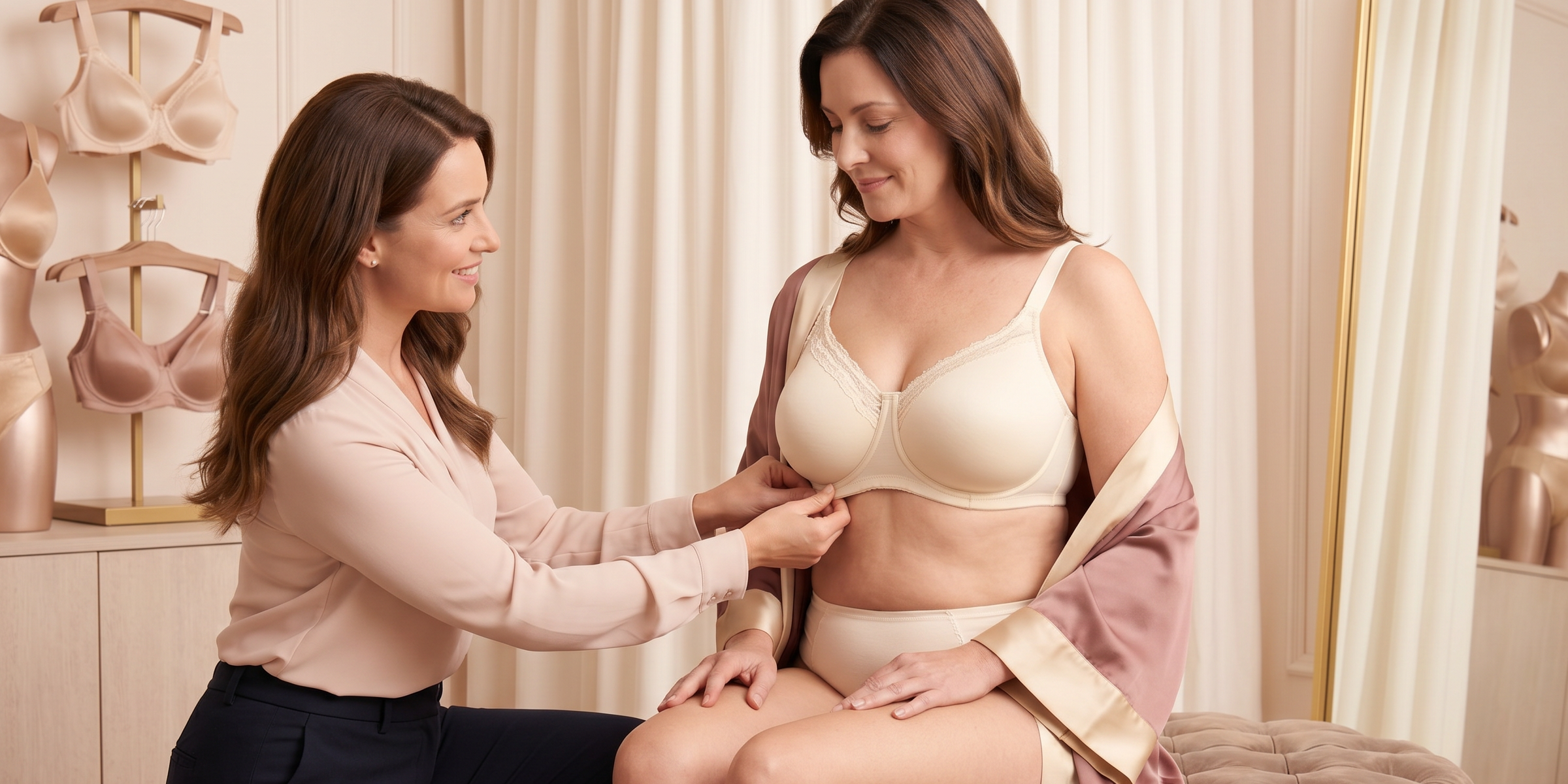
If you are not sure whether the rolling is coming from the band, cups, or style, a professional bra fitting can save a lot of guessing.
A professional bra fitter can compare band size, cup depth, wire shape, strap placement, and style construction all at once. That is often faster than trying one random size change at a time.
A fitting can be especially helpful if you are between sizes, have a full bust, wear larger cup sizes, have had recent size changes, or keep seeing the same fit issue across multiple bras.
If you are not sure what to try next, book a fitting appointment and let us help you narrow it down.
FAQs About Bras Rolling Under The Bust
Does my bra rolling under the bust mean the band is too tight?
Not always. A bra band can roll because it is too tight, but it can also roll because it is too loose, too soft, too wide, stretched out, or being pushed out of place by the cups. Start by checking whether the band is level and whether the cups are sitting correctly before assuming you need a larger band.
Can a bra roll up because the band is too loose?
Yes, it can. If the band is too loose, it may shift instead of anchoring the bra. That movement can let the bottom edge fold or curl. A firmer band or different band size may help, but the cups should be checked at the same time.
Why does my wireless bra roll up under my bust?
A wireless bra may roll if the band is too soft, too stretchy, too narrow, or not structured enough for your bust. The cups can also be part of the issue if they let the bust sit too low. Wireless bras can work beautifully, but they still need enough construction to keep the bra steady.
Is a bra rolling under the bust the same as the band riding up?
They are related, but they are not the same symptom. Rolling usually means the bottom edge of the band is curling or folding. Riding up usually means the back band is moving upward instead of staying level. If your main issue is the back band climbing, start with a band-riding-up fit check.
Should I size up if my bra rolls under the bust?
Maybe, but sizing up is not automatically the best first step. If the band is digging and curling because it is too tight, a different band size may help. If the band is loose, stretched, or the cups are too shallow, sizing up in the band may make the bra less stable. Check the band, cups, and style before choosing the next size.
Is it normal for a bra to roll under the bust?
It is common, but it is still a sign worth checking. A bra that rolls under the bust may be telling you the band is not staying anchored, the cups need a different shape, the elastic is worn, or the style is not the best match for your body. You should not have to spend the day pulling your bra back into place.
A Better Fit Should Stay Flat And Feel Steady
A bra that rolls under the bust is giving you useful information. It may be telling you the band is not anchoring, the cups need more room, the elastic has worn out, or the style construction is not quite right for your body.
You do not have to solve it by guessing. Start with the band, check the cups, look at the age of the bra, and compare how different styles behave when you sit, move, and go through your day.
The goal is not a bra that only looks good for a minute in the fitting room. It is a bra that stays steady, feels supportive, and works with your body in real life.