Why Does My Bra Band Ride Up?
If your bra band keeps riding up in the back, it is usually a sign that the bra is not anchoring the way it should.
Many women notice this problem and immediately start tightening the straps. That can feel like it helps for a few minutes because it lifts the front of the bra, but it often makes the real problem worse. When the straps are doing too much work, they can pull the back band upward instead of letting the band sit firmly around the body.
A good bra fit starts with the band. The band is the anchor of the bra, and it should do most of the supporting work. The straps should help stabilize the cups, but they should not have to carry the full weight of the bust.
If your bra rides up in the back, the band may be too loose, stretched out, pulled upward by tight straps, or affected by the way the cups fit. Here is how to check what is really happening before you guess at a new size.
Why Your Bra Band Rides Up In The Back

A bra band usually rides up because it is losing its anchor point.
When the band is firm enough and sitting in the right place, it should wrap around the body with enough tension to hold the bra steady. It should not creep up toward your shoulder blades, shift every time you move, or need constant pulling down during the day.
A riding band can mean the band size is too large, but that is not the only possible cause. It may also happen when:
-
The bra has stretched out from wear.
-
The straps are tightened too much.
-
The cups are too small or too shallow.
-
The style does not match your shape or support needs.
-
The bra is being worn on the wrong hook setting.
-
The band is not firm enough for the amount of support you need.
That is why it helps to look at the whole bra before deciding the band is simply “too big” or “too small.”
Your Bra Band Is The Anchor, Not Your Straps
One of the most important things to understand about bra fit is that the band should do most of the work.
The band wraps around the ribcage and creates the foundation for the bra. When it fits well, it helps keep the cups in place, supports the bust from below, and gives the straps something stable to work with.
The straps have an important job too, but it is a supporting role. They help adjust the upper cup, stabilize the bra, and fine-tune the fit. They should not be the main source of lift.
If your straps are doing all the work, you may notice:
-
The back band rides up.
-
The straps dig into your shoulders.
-
The front of the bra feels like it drops during the day.
-
You keep tightening the straps to feel supported.
-
The bra feels less secure when you loosen the straps.
In the fitting room, this is one of the first things I would check. If the band cannot stay in place without the straps being pulled very tight, the bra is probably not giving you support from the right place.
What A Supportive Band Should Feel Like
A supportive band should feel firm, steady, and secure. It should not feel painfully tight, but it should not feel loose enough to slide around either.
A good starting point is to look at the band from the side in a mirror. The back band should usually sit level with the front of the bra, or close to level depending on your body shape and the style of the bra.
You should be able to breathe comfortably. You should also feel that the band is holding the bra in place without needing the straps to pull everything upward.
For a newer bra, the band should usually fit on the loosest comfortable hook. That gives you room to move to tighter hooks as the elastic relaxes over time. If a new bra already needs the tightest hook to feel secure, it may stretch out too quickly.
Why Tightening Your Straps Can Make The Band Ride Up
Tightening the straps is one of the most common reactions to a riding band, but it is often not the best fix.
When the straps are tightened too much, they pull upward from the front and back of the bra. That can lift the front temporarily, but it can also drag the back band higher on your body. Instead of solving the support problem, the straps are pulling the bra out of position.
This is why a bra can feel both tight and unsupported at the same time. Properly adjusted shoulder straps should feel secure without digging, pulling, or doing most of the lifting. The straps may feel tight on your shoulders, but the band may still be moving because it is not anchoring properly.
A quick check is to loosen the straps slightly and see what happens. If the band drops into a better position and stays more level, the straps were likely doing too much work. If the bra immediately feels unsupported when you loosen the straps, the band or cup fit may need attention.
The Most Common Reasons A Bra Band Rides Up

A riding band is usually not random. It is a fit signal. The goal is to figure out which part of the bra is causing the issue.
The Band May Be Too Loose
The most common reason a bra band rides up is that the band is too loose or too large for your body.
When the band does not have enough tension, it cannot stay anchored around the ribcage. When the band is too loose, the bra can lose its balance. The front may drop, the back may climb, and the straps may start carrying more of the support.
Signs the band may be too loose include:
-
The back band sits noticeably higher than the front.
-
You can pull the band far away from your body without much resistance.
-
The bra shifts when you raise your arms.
-
You need the tightest hook for the bra to feel stable.
-
The straps feel like they are doing most of the lifting.
-
The bra feels supportive only when the straps are very tight.
If this sounds familiar, a more snug, supportive band may help. That might mean trying a smaller band size, a different sister size, or a style with stronger band construction.
The Bra May Have Stretched Out
Sometimes the bra was not the wrong size when you bought it. It may simply be worn out.
Bra bands stretch with repeated wear, gentle wash routines, heat, body oils, and time. A bra that used to sit firmly may start riding up because the elastic no longer has enough recovery. Older bras can lose elasticity over time even if the original size was right.
This is especially common with favorite bras that get worn often. If you reach for the same bra several times a week, it may wear out faster than the rest of your drawer.
Signs the bra may be stretched out include:
-
It used to fit better than it does now.
-
You are wearing it on the tightest hook and it still moves.
-
The band feels softer or looser than it used to.
-
The elastic looks rippled, tired, or curled.
-
The bra has lost its shape after washing and wearing.
If the bra is old and stretched, changing size may not be the first answer. Replacing the bra in the correct size may solve the problem more reliably than trying to make a tired band work longer. Many frequently worn bras lose support within months rather than years, depending on how often you wear them, how many bras you rotate, and how they are cared for.
The Straps May Be Doing Too Much Work

If your band rides up and your shoulders feel pressure, take a closer look at the straps.
Straps should be adjusted enough to keep the cups smooth and secure, but not so tight that they lift the whole bra from the shoulders. If you remove the straps from the support equation for a moment, the band should still feel like it is doing meaningful work.
Try this at home:
Put on the bra and adjust it as you normally would. Then loosen the straps a little. If the back band immediately drops closer to level, the straps were probably pulling it upward.
That does not mean straps do not matter. It means they should not be compensating for a band or cup that is not doing its job.
If you keep tightening the straps throughout the day, it is worth checking the band fit first. You can also compare more structured options, such as three-part cup bras, if your current bra feels too soft or unstable for your support needs.
The Cups May Be Affecting The Band
A riding band is often blamed on the band, but the cups can be part of the problem too.
If the cups are too small, too shallow, or not shaped well for your breast tissue, the bust may push the cups away from the body. Cups that are too small can lift the bra and pull the band upward. That can make the bra shift, tilt, or pull out of position. The band may ride up because the whole bra is being affected by a cup fit issue.
Cup fit may be part of the problem if you notice:
-
Breast tissue spilling over the top or sides.
-
The center gore not sitting close to the body in an underwire bra.
-
The cups flattening your bust instead of containing it.
-
The wires sitting on breast tissue.
-
The band feeling tight in front but loose or unstable in back.
-
The bra sliding or tilting no matter how you adjust the straps.
This is why going down in the band is not always the whole answer. If the cups are too small, a smaller band may make the bra feel tighter without actually improving the fit.
In that case, the better starting point may be a larger cup size, a deeper cup, a wider or narrower wire shape, or a different style instead of only tightening or downsizing the band. For some women, full coverage bras can feel more secure because they offer more containment, but the cup still needs to match your shape.
The Style May Not Be Right For Your Shape Or Support Needs
Sometimes the size is close, but the style is not quite right. Different breast shapes, cup depths, and tissue placement can all affect which bra styles feel secure.
Different bras, even in the same bra size, can fit very differently. A shallow molded T-shirt bra, a soft wireless bra, a plunge bra, and a seamed full coverage bra can all behave differently on the body.
A band may ride up more easily if the style does not provide enough structure for your bust, your tissue shape, or how you move during the day.
For example:
-
A very soft bra may feel comfortable but may not anchor firmly enough.
-
A shallow molded cup may push the bust downward or outward if the shape is not right.
-
A low-coverage style may feel less contained for fuller breast tissue.
-
A wireless bra may need strong fabric, seaming, or inner support to stay stable.
-
A strapless bra needs an especially secure band because it cannot rely on straps for extra stability.
That does not mean one style is “good” and another is “bad.” It means the style needs to match what your body and wardrobe need from the bra.
If you prefer underwire support, underwire bras can be a helpful place to compare structure and cup shape. If you prefer wire-free comfort, wireless bras can still work well, but look for styles with enough band and cup support to keep the bra from shifting.
A Simple At-Home Band Fit Check

Before you decide you need a totally different size, try this simple fit check in front of a mirror.
1. Look At The Band From The Side
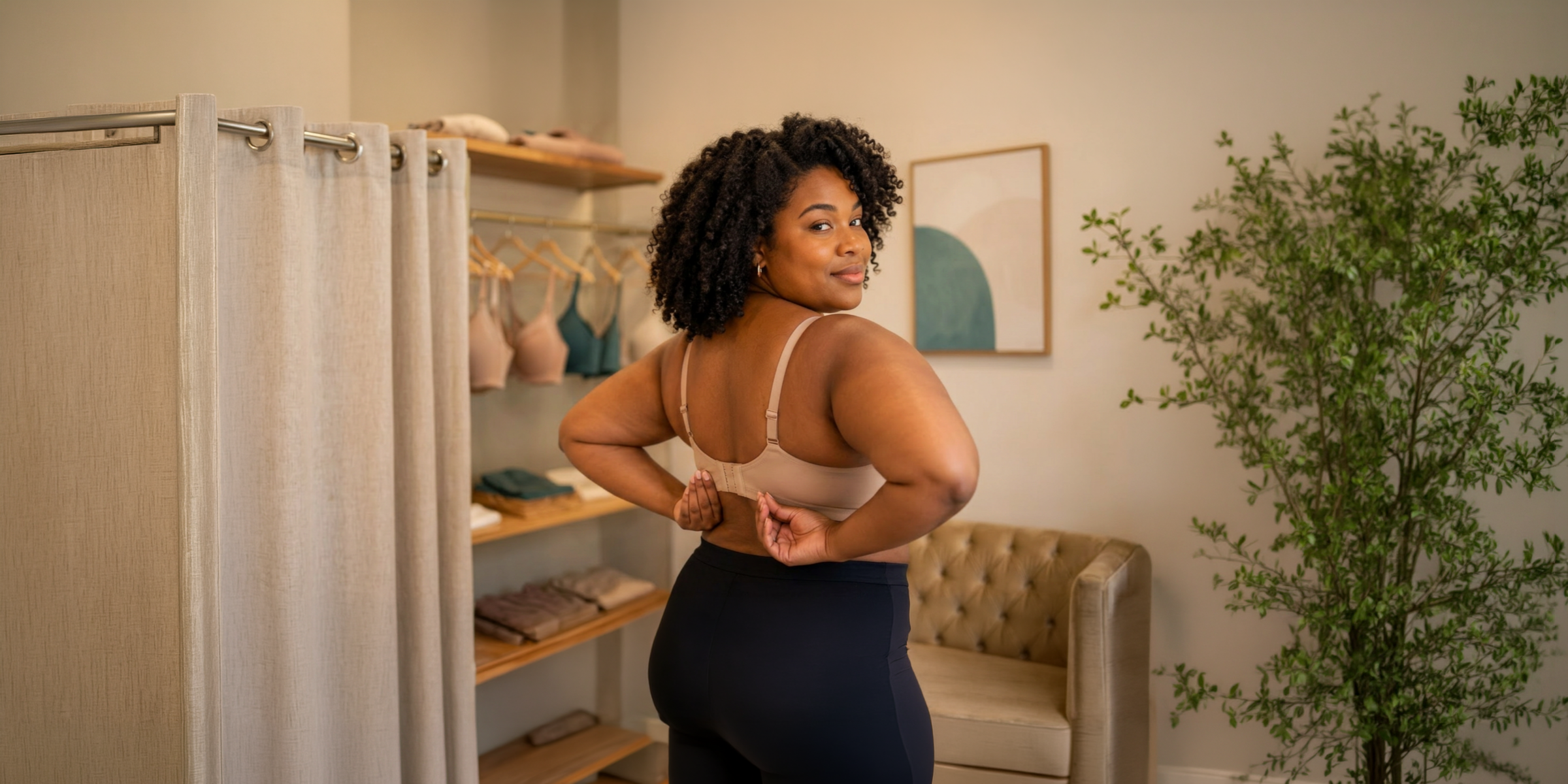
Stand naturally and look at the bra from the side. Is the back band sitting much higher than the front? If yes, the band may not be anchoring properly.
The band should usually sit straight and level across your back and, if possible, lay flat rather than climbing toward the shoulder blades. Some body shapes and bra styles may change the visual line a bit, but a band that climbs toward the shoulder blades is worth checking.
2. Check The Hook Setting
If the bra is new, it should usually feel secure on the loosest comfortable hook. If it only feels supportive on the tightest hook right away, the band may be too loose or may stretch out quickly.
If the bra is older and now needs the tightest hook, that may be normal wear. But if it still rides up on the tightest hook, the elastic may be worn out.
3. Loosen The Straps Slightly
Loosen the straps a little and see whether the band drops into a better position. Straps should hold the cups in place, not support the full weight of the bust.
If the back band was being pulled upward because the straps are too tight, this may make the issue obvious. The goal is not to wear the straps too loose. The goal is to see whether the band can stay in place without the straps doing all the work.
The straps should feel secure without pinching, digging, or pulling the back band upward.
4. Raise Your Arms And Move Around
Lift your arms, twist gently, and move the way you normally would during the day.
If the band slides up as soon as you move, it may be too loose, too stretched, or not supportive enough for your body. A bra that only behaves when you stand perfectly still may not be the right fit for real life.
5. Check The Cups
Look at the cups after the band check.
Are the cups spilling, gaping, wrinkling, flattening, or pushing tissue toward the underarm? Is the center gore sitting close to the body in an underwire bra? Are the wires sitting around the breast tissue rather than on top of it?
If the cups are not fitting well, the band may not be able to do its job properly.
6. Notice Where You Feel The Support
Ask yourself where the support seems to come from.
If it feels like the lift is coming mostly from the shoulders, the straps are probably doing too much. If the band feels firm and steady around the body, you are more likely getting support from the right place.
Should You Go Down A Band Size?

If your bra band rides up and feels loose, going down a band size may help. But it is worth checking the cups at the same time.
Bra sizing is connected. When you change the band size, the cup volume changes too unless you adjust the cup letter. For example, if you size down in the band, you often need to adjust the cup letter to maintain a similar volume. That is where sister sizes can come into the conversation.
For example, if a band feels too loose but the cup volume feels close, a fitter may compare a smaller band with an adjusted cup letter to keep the volume more similar. This can help, but it is not a universal fix.
A smaller band may be worth trying if:
-
The current band rides up.
-
The band feels loose even on a tighter hook.
-
The straps are doing most of the support work.
-
The cups seem close to the right volume.
-
The bra shifts when you move.
But a smaller band may not be the best first move if:
-
The cups are already spilling or flattening the bust.
-
The wires are sitting on breast tissue.
-
The band feels painfully tight in the front.
-
The bra feels unstable because the style is too shallow or soft.
-
The current bra is simply worn out.
In those cases, cup size, cup shape, or style may need to be adjusted too.
When A Different Cup Or Style May Be Better
If your bra rides up even though the band feels tight, look beyond the band size.
A tight band is not automatically a supportive band. A bra can feel tight because the cups are too small, the wires are not sitting in the right place, or the style is pushing against the body instead of fitting around it.
If the cups are too small, the breast tissue may push the bra forward or downward. That can make the back band move up as the bra tries to find space. You may feel tightness around the front of the ribcage, but the bra still may not feel stable.
This is where a different cup shape can make a big difference. A deeper cup, a different wire shape, or a more structured style may allow the band to sit more securely because the cups are no longer fighting the body.
For fuller busts, structured options often make the band’s job easier. That may include seamed cups, fuller coverage, stronger side support, or a more supportive band design.
When To Replace The Bra Instead Of Changing Size

If the bra used to fit well and now rides up, it may be time to replace it.
Bras are working garments. The elastic has a job to do, and over time it loses strength. Even a high-quality bra will not support the same way forever, especially if it is worn often.
You may need a replacement if:
-
The band rides up even on the tightest hook.
-
The elastic feels loose or tired.
-
The bra no longer returns to shape after washing.
-
The straps need constant tightening.
-
The cups or band have lost structure.
-
The bra feels comfortable only because it has stretched out.
That last point is important. Sometimes an old bra feels comfortable because it is no longer firm enough to support well. A new bra in the right size may feel firmer at first because the band is actually doing its job again.
If you are rebuilding your bra drawer, start by comparing the styles that already work best for you. Then look at what those bras have in common: band firmness, cup depth, coverage, wire shape, strap placement, or fabric structure.
You can also browse women’s bras by style once you have a clearer idea of what fit issue you are solving.
When A Fitting Can Help

A professional bra fitting can be especially helpful when the band rides up and there is more than one fit issue happening at the same time.
For example, you may notice the band riding up, the straps digging, and the cups spilling. Or the band may feel tight, but the bra still shifts. That is where it becomes harder to diagnose from one symptom alone.
It is also worth rechecking your size after body changes, or any time the bras that used to work no longer feel supportive.
A fitter can help you compare:
-
Whether the band needs to be firmer.
-
Whether the cup volume needs to change.
-
Whether a sister size is worth trying.
-
Whether the cup shape is the real issue.
-
Whether a different style would support you better.
-
Whether your current bra has simply stretched out.
This is also useful if your body has changed recently because of weight changes, pregnancy, nursing, surgery, menopause, activity changes, or natural shifts over time. Your old size may still be a helpful starting point, but it may not tell the whole story.
If you are not sure where to start, you can book a fitting appointment with The Bra Diva and get help narrowing down the size, style, and fit details that work best for you.
FAQs About Bra Bands Riding Up
Does A Bra Band Riding Up Mean The Band Is Too Big?
Often, yes. A band that rides up in the back is commonly too loose, too stretched out, or not firm enough to anchor the bra. But it is not the only possible cause. Tight straps, cup fit, worn elastic, and style mismatch can also make the band move.
Can Tight Straps Make My Bra Band Ride Up?
Yes. When straps are tightened too much, they can pull the back band upward. This can make the bra feel lifted for a short time, but it often shifts the support to the shoulders instead of letting the band do the work.
Should My Bra Band Be Straight Across My Back?
Usually, the band should sit level or close to level around the chest and back. It should not climb high toward the shoulder blades. That said, body shape and bra style can affect the exact look, so use this as a practical fit check rather than a rigid rule.
Should I Go Down A Band Size If My Bra Rides Up?
A smaller or firmer band may help if your current band feels loose or stretched out. But check the cups too. If the cups are too small or the wrong shape, changing only the band may make the bra feel tighter without solving the real fit issue.
Why Does My Bra Ride Up Even Though It Feels Tight?
If the band feels tight but still rides up, the cups or style may be part of the problem. Cups that are too small, too shallow, or not right for your breast shape can make the bra shift. Tight straps can also pull the band upward.
Is My Bra Too Old If The Band Rides Up?
It may be. If the bra used to stay in place but now rides up, the elastic may have stretched out. If you are already on the tightest hook and the band still moves, replacing the bra may be better than changing size.
The Bottom Line

If your bra band rides up in the back, start with the band, but do not stop there.
The band should be the anchor of the bra. It should feel firm, steady, and supportive without needing the straps to do all the lifting. If the band is riding up, it may be too loose, stretched out, or pulled upward by tight straps. A well-fitting bra should usually stay level while the band does most of the support. But cup fit, style, and bra age can all play a part too.
Before buying another bra in the same size, check how the band sits, loosen the straps, look at the cups, and notice whether the support is coming from the band or your shoulders.
A riding band is not a failure of your body. It is information. Once you know what the bra is telling you, it becomes much easier to choose the next size, style, or fitting step with confidence.