
Why Do My Bra Cups Gap at the Top?
If your bra cups gap at the top, it is tempting to assume the cup is simply too big. Sometimes that is true, but it is not the only answer.
A bra cup can gap because the cup has too much room, but it can also gap because the cup is too tall, too shallow, too open at the neckline, or too molded for your natural shape. The band may not be anchoring the bra correctly, the straps may be adjusted poorly, or the style may just not be the best match for how your breast tissue sits.
That is why cup gapping is a clue, not a final diagnosis. Before you size down, it helps to look at what kind of gapping you are seeing and where it is happening.
Why Bra Cups Gap at the Top

Bra cups usually gap at the top when the cup edge is not following the shape of the breast closely enough. Here are some of the most common reasons for bra gaping at the cup edge:
-
The cups may have too much room, or the cup shape may not be giving your breast tissue the right place to settle.
-
The cup may be too tall for your frame or breast shape.
-
The cup may be too open at the top.
-
The cup may be too shallow and pushing breast tissue away instead of letting it sit forward.
-
A shape mismatch between your breasts and the bra style may be causing the gap.
-
The molded cup shape may not match your body.
-
The band may be too loose or riding up, which can make the cups look like the problem.
-
The straps may be too loose or pulled too tight.
-
Your breast tissue may be fuller in one area than another.
Many women are fuller at the bottom or have a shallower breast shape, so the issue is often shape rather than just size.
In other words, the problem is not always the size printed on the tag. Your bra size is a starting point, but it does not tell the whole fit story. The actual fit depends on the brand, cup shape, fabric, wire width, strap placement, and how the bra sits on your body.
A good cup should hold the breast tissue without cutting in, spilling over, wrinkling heavily, or standing away from the body. If the top of the cup is gapping, the goal is to figure out whether the cup has too much space or whether the shape of the cup is wrong for you.
First, Make Sure the Bra Is Sitting in the Right Place
Before deciding the cup is too big, check how the bra is sitting on your body. A bra can look like it is gapping when it is simply not positioned correctly.
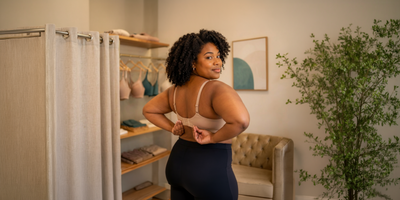
Start by putting the bra on the loosest comfortable hook. The band should sit level around your body, not climbing up your back. If the bra has underwires, the wires should sit around your breast tissue, not on top of it. Then gently use the Swoop and Scoop technique to settle your breast tissue into the cups so the tissue is lifted into the cup rather than sitting below or beside it.
This step matters because a cup can look empty if the breast tissue is not fully settled into it. Many women put on a bra quickly, adjust the straps, and assume the cup is wrong when the bra has not been seated properly yet. These are helpful signs to check before troubleshooting the cups further.
Measuring both your band size and bust size can help you choose a better starting size, but the try-on fit still matters.
If you are still narrowing down your starting size, The Bra Diva’s bra size chart can help you compare band and cup sizing before you decide what to try next.
Check the band before blaming the cup
The band is the anchor of the bra and should do most of the supporting work. If the band is too loose, the bra may shift away from the body instead of sitting smoothly around the torso, which can make the cups gap at the top.
A loose band can also let the back of the bra ride up. When that happens, the front of the bra can tilt forward and create a bra gap at the top, or move away from the breast tissue on the chest. The cups may then look too large, even if the cup volume is not the real issue.
A quick check: look at the side and back of the bra in a mirror. If the band is climbing up or moving around easily, the cups may not be held in the right place. In that case, sizing down in the cup may not fix the gapping because the bra is losing its anchor.
Adjust the straps, but do not let them do all the work
Straps should help stabilize the cups, but they should not be responsible for forcing the bra to fit.
If your straps are too loose, the top edge of the cup may sit away from the body, so check whether your bra straps need adjustment. You can tighten the shoulder straps slightly to see whether the cup sits more smoothly. But if you have to pull the straps very tight to close the gap, the bra is probably not fitting correctly somewhere else.
Over-tightened straps can also create new problems. They may pull the cups upward, distort the cup shape, dig into your shoulders, or make the band ride up in the back. If the only way to reduce cup gapping is to overtighten the straps, look at the band and cup shape next.
When Cup Gapping Means the Cup May Be Too Big

Sometimes cup gapping does mean the cup has too much volume. This is most likely when the cup feels roomy all over, not just at the very top edge.
The cup may be too large if:
-
There is empty space through the top and center of the cup.
-
The cup wrinkles or collapses after the bra is properly positioned.
-
The breast tissue does not fill the bottom or sides of the cup.
-
The top edge gaps even after the band and straps are adjusted correctly.
-
The cup feels like it is sitting around the breast instead of supporting it.
In that case, trying a smaller cup size in the same style may be a reasonable next step, especially if the band feels secure and level.
For example, if the band feels right but the entire cup has extra room, you might try the same band size with one cup size down. But pay attention to what happens next. A smaller cup should reduce extra space without cutting into the breast tissue or pushing tissue toward the underarm.
Signs to try a smaller cup size
A smaller cup size may be worth trying when the cup has extra space in several areas. This is especially true if the cup gaps at the top and also feels empty at the bottom, side, or center.
The key question is whether the cup volume is too large overall. If the whole cup feels too roomy, a smaller cup may help.
When you try the smaller cup, check for:
-
Smooth containment without spilling.
-
Wires sitting around the breast tissue.
-
No cutting in at the top edge.
-
No pressure or pinching near the underarm.
-
A band that still sits level and secure.
-
Your breasts filling the cup without extra room at the bottom or sides.
If the smaller cup solves the gap and still feels comfortable, the original cup may simply have been too large.
When sizing down may not solve it
If sizing down reduces the gap but creates spillage, cutting in, wire pressure, or a flattened look, the issue may not be cup size. It may be cup shape.
This is where many shoppers get frustrated. One size gaps, but the next cup down feels too small. That usually means the volume is close, but the cup shape is still working against your breast shape.
In that case, you may not need a smaller cup. You may need a different cup style that follows your shape more naturally.
When the Cup Is the Right Size but the Wrong Shape

Different breast shapes need different cup constructions, which is one of the biggest reasons bras gap at the top. Two bras can have the same size on the label but fit very differently because the cups are built differently.
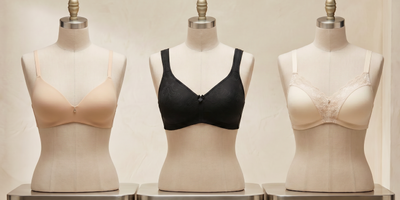
One cup may be tall and full coverage. Another may be shorter and more open. One may be shallow and wide. Another may be deeper and more projected. One may be molded and firm, while another may have seams or stretch fabric that adapts more easily.
That is why the same size can gap in one bra and fit beautifully in another. Looking for the right shape match across sizes and styles often makes more sense when size alone does not solve the issue.
The cup may be too tall
A cup can have the right amount of volume but still be too tall for your body. If the cup rises higher than your breast tissue naturally fills, the top edge may stand away from the skin.
This can happen in full coverage bras, tall molded cups, and some styles designed for more upper fullness. You may feel like the lower part of the cup fits well, but the top portion looks empty.
If that sounds familiar, you may not need a smaller cup. You may need a lower neckline, a shorter cup height, or a style that is not as tall through the upper cup.
Some women do well in plunge bras because the cup is lower toward the center. Demi styles may also help some shoppers because they use less upper cup, but the shape still needs to match your fullness. Others prefer styles with stretch lace or a softer upper cup that can follow the body more closely.
The cup may be too open on top
Some bras are designed with a more open neckline. This can be beautiful and comfortable on the right shape, but it can gap if you do not have much fullness near the top of the breast.
This is common for women who are fuller on the bottom than on the top. The lower part of the cup may feel filled, but the upper edge does not have enough tissue behind it.
A balconette shape, for example, can be lovely when it matches your fullness and wardrobe needs. Balconette bras often have less upper cup to fill, which can reduce bra cup gaps when the shape works. But if the cup is very open and your breast tissue does not naturally fill that top edge, you may see gapping.
That does not mean balconette bras are wrong for you. It means the specific balconette shape, cup height, and fabric need to be right. If you are comparing styles, browse balconette bras with attention to cup height, openness, and whether the top edge is firm or flexible.
The cup may be too shallow
A shallow cup can also create gapping, which surprises many people.
When a cup is too shallow, it may not give the breast tissue enough room to sit forward into the cup. Instead, the cup can push the tissue back or flatten it. That can make the top edge look like it is gapping, even though the cup is not truly too big.
This is especially common in rigid molded or foam cups that do not adapt to your breast shape. This often affects women with shallow breasts or those who are fuller at the bottom, because the cup can flatten the tissue instead of providing lift forward. The cup may look smooth on the hanger, but if the depth is not right for your body, it can create a strange combination of flattening and gapping.
Signs the cup may be too shallow include:
-
The cup gaps at the top but feels tight somewhere else.
-
The center gore does not sit comfortably in an underwire bra.
-
The wire feels like it is sitting on breast tissue.
-
The cup flattens the bust instead of giving the support and lift a better-shaped cup should provide.
-
Sizing down makes the bra feel worse.
In this case, a deeper cup shape may work better than a smaller cup size.
Why Molded and T-Shirt Bra Cups Can Gap

Molded bras and T-shirt bras are common culprits when cups gap at the top. That does not mean they are bad bras. It simply means the shape match has to be more precise.
A molded cup holds its own shape. It does not adjust as much to your body as a seamed cup, stretch lace cup, or softer fabric cup might. If the molded shape is taller, rounder, shallower, or more open than your natural breast shape, the cup can stand away from the body.
This is why a smooth cup may look perfect on one person and gap on another, even in the same size.
Smooth cups need the right shape match
T-shirt bras are designed to create a smooth look under fitted clothing. That can be very useful under thin knits, tees, and everyday tops. But the smoother the cup, the more important the shape match becomes.
If the cup is molded into a shape that your breast tissue does not fill, the cup has nowhere to go. It may keep its rounded shape while your body sits differently inside it. The result is often space at the top of the cup.
A lightly padded style may help some shoppers if the gap is small, but padding should not be used to force a bra shape that otherwise does not fit. If the band, wires, or cup depth still feel wrong, padding is only covering up the real fit issue.
If you like smooth bras, do not give up on them after one style gaps. Instead, compare different T-shirt bra shapes, cup heights, and depths. The Bra Diva’s T-shirt bra size chart can help you think through T-shirt bra fit more specifically, and the T-shirt bras collection can be a useful place to compare style options.
When to try a seamed or softer cup instead
If molded cups keep gapping no matter what size you try, a softer or seamed cup may be worth considering.
Seamed cups are built from multiple pieces of fabric, so they can shape and support the breast differently. A stretch lace upper cup can also be helpful because it may follow the top of the breast more gently than a rigid molded edge.
This does not mean every seamed bra will fit better. It means a less rigid cup can sometimes adapt more easily when your issue is shape, not size.
A good fitting approach is to compare one molded style and one softer or seamed style in a similar size. If the molded bra gaps but the seamed bra follows your shape more naturally, you have learned something useful about your cup shape needs.
Why the Same Size Can Gap in One Bra but Fit in Another

One of the most confusing parts of bra shopping is that the same size can fit differently across brands and styles. This is normal.
A 34F, 36DD, or 32G is not a complete description of how a bra will fit. It tells you a starting size, but it does not tell you the cup height, wire width, cup depth, neckline shape, fabric stretch, strap placement, or how open the top of the cup is.
A bra can gap in one style because the cup is tall. Another can gap because the top edge is too open. Another can feel too small because the cup is too shallow. Another can feel just right because the cup has the right mix of depth, height, and flexibility.
This is why it helps to think beyond the size label.
Size is a starting point, not the whole fit story
Your bra size helps narrow the search, but the final fit depends on the actual bra.
When you try on a bra, ask:
-
Does the band sit level and feel secure?
-
Does the cup contain the breast tissue without cutting in?
-
Does the cup follow the body, and does the center gore lie flat when the size and shape are right?
-
Does the wire sit around the tissue, if the bra has wires?
-
Do the straps stabilize without digging or pulling the band up?
-
Does the cup shape match how your breast tissue naturally sits?
If the answer is mostly yes but the top edge still gaps, the issue may be a small shape mismatch. If several answers are no, the size or style may need a bigger rethink and may become uncomfortable over time.
What Your Breast Shape May Be Telling You
Cup gapping is often related to breast shape, fullness, and where the breasts sit on the chest. This is not about whether your body is right or wrong. It is simply about how your tissue is distributed and what kind of cup shape follows it best.
Some women have more fullness at the bottom of the breast. In that case, the lower cup may fill nicely while the upper cup gaps. Some have softer tissue that settles lower in the cup, especially in a molded or tall style. Some have more center fullness, side fullness, or natural asymmetry from one side to the other.
This can affect how the top of the cup fits.
For example, if you are less full near the neckline, a tall or open cup may gap even when the lower part of the cup feels filled. If you are more projected, a shallow cup may flatten the breast and create space at the top. If there is asymmetry between breasts and one breast is slightly smaller, one cup may gap more than the other.
These are normal fitting realities. A good bra should work with your shape, not make you feel like your body is the problem.
What To Try Next If Your Bra Cups Gap
Once you know that cup gapping can have several causes, the next step becomes easier. Instead of immediately choosing a smaller cup, use the gap as information.
Try the same bra one cup size down if the whole cup feels roomy
If the band feels secure and the entire cup has extra space, try one cup size down in the same style.
This is most useful when the top, center, and lower part of the cup all seem too roomy. If the smaller cup removes the gap without creating overflow, it may be the better size.
Try a different cup shape if the volume seems close
If the cup feels close to the right volume but gaps only at the top, trying different bra styles often works better than assuming you need a smaller cup or a new bra.
Look for differences in:
-
Cup height
-
Neckline shape
-
Cup depth
-
Molded versus seamed construction
-
Stretch versus firm upper cup
-
Wire width
-
Strap placement
This is often the better next step when one size gaps but the next size down cuts in. That comparison can help you decide whether the issue is the current style or whether you truly need a new bra.
Try a shorter or lower cup if the upper cup is the issue
If the gap is mainly at the top edge, the cup may simply be too tall. A shorter cup, plunge shape, or style with a lower neckline may sit more smoothly.
This can be especially helpful if full coverage bras tend to feel like they have extra fabric above the breast.
That said, full coverage can still be helpful for many shoppers, especially when containment is the goal. The key is finding the right full coverage shape, not just choosing the tallest cup. If you want more coverage, compare full coverage bras with attention to cup height and upper-cup flexibility.
Try a seamed or stretch-lace cup if molded cups keep gapping
If molded bras gap again and again, try a softer or seamed cup. A stretch lace upper cup may be especially helpful if your fullness changes slightly during the month, if one side is a little different from the other, or if rigid cup edges tend to stand away from your body.
A seamed cup may not give the same invisible T-shirt look, but it can offer a more adaptable fit for many shapes.
Recheck the band if the bra shifts during the day
If the cups look fine when you first put the bra on but gap after a few hours, the band may be shifting, or the bra may be losing elasticity as you wear it. A bra that moves around during the day can change how the cups sit.
Check whether the band is riding up, twisting, or sliding. If it is, cup gapping may be a support and anchoring issue, not just a cup issue.
If the bra has lost elasticity, the band may no longer hold the cups in place. How long a bra lasts depends on how often you wear it, how you wash it, and how many bras you rotate.
Book a fitting if the signals are mixed
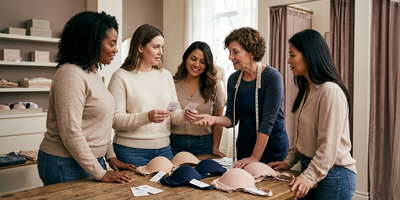
If one size gaps, another size cuts in, and different styles all seem to fail in different ways, a fitting can save a lot of guessing.
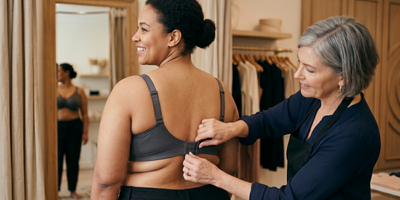
A fitter can help you compare whether the issue is band size, cup volume, cup height, cup depth, or style. This is especially helpful if you are shopping across different brands or if your body has changed recently.
You can book a fitting appointment with The Bra Diva if you want more personalized help narrowing down what to try next.
FAQ: Bra Cups Gapping at the Top
Does cup gapping always mean my bra cup is too big?
No. Cup gapping can mean the cup is too big, but it can also mean the cup is too tall, too shallow, too open at the top, or not the right shape for your breast tissue. It can also happen when the band is too loose or the straps are not adjusted well.
Why do molded bra cups gap even when the size seems right?
Molded cups keep their own shape. If that shape does not match your breast shape, the cup can gap even when the size is close. A molded cup that is too tall, too shallow, or too open at the top may stand away from the body instead of following it.
Should I size down if my bra gaps at the top?
Try sizing down only if the whole cup feels roomy. If the smaller cup causes spilling, cutting in, flattening, or wire discomfort, the issue may be cup shape rather than cup size. In that case, a different style may work better.
Why does one breast gap more than the other?
Many people have natural differences between sides. One breast may be slightly smaller, fuller in a different place, or shaped differently. This is normal. A fitter may suggest fitting the fuller side first, then using strap adjustment, cup style, or removable padding to improve the smaller side.
Can tightening my straps fix cup gapping?
Sometimes a small strap adjustment can help the cup sit more smoothly. But if you have to overtighten the straps to close the gap, the bra probably needs a better band fit, cup size, or cup shape. Straps should stabilize the bra, not force the cups to fit.
The Bottom Line on Cup Gapping

Bra cups that gap at the top are trying to tell you something, but they are not always telling you to size down.
The cup may be too big, but it may also be too tall, too shallow, too open, too molded, or simply the wrong shape for how your breast tissue sits. The band and straps matter too, because a bra that is not anchored correctly can make the cups look like the problem.
Start by checking the band, settling the breast tissue into the cups, and adjusting the straps comfortably. Then look at whether the cup has too much volume or whether the shape is not following your body.
If you are still unsure, do not blame your body. Try a different cup shape, compare a molded style with a softer or seamed cup, or get help from a fitter. The right bra should work with your shape, not make you feel like you have to fit the bra.