How Should a Bra Fit? A Practical Boutique Fitter’s Checklist
If your bra feels fine when you first put it on but starts digging, shifting, slipping, or gaping by lunchtime, the size on the tag may not be telling the whole story.
A good bra fit is not only about finding the “right” number and letter. It is about how the band sits, how the cups hold your breast tissue, where the underwire lands, how the straps behave, and how the bra feels when you actually move through your day.
This checklist walks you through the same kinds of clues a boutique fitter would look for in the fitting room. Use it as a practical starting point, not a rigid rulebook. Bodies, brands, breast shapes, and bra styles all vary, so the goal is to understand what your bra is telling you and what to check next.
Quick Answer: How Should A Well-Fitting Bra Fit?

A well-fitting bra should feel secure, supportive, and wearable without needing constant adjustment.
In general:
-
The band should sit level around your body and do most of the supporting work.
-
The cups should contain your breast tissue without spilling, cutting in, flattening, or leaving obvious empty space.
-
The straps should help stabilize the bra without digging into your shoulders.
-
The center gore on many underwire bras should sit close to the body.
-
The underwire should sit around your breast tissue, not on top of it.
-
The bra should stay reasonably in place when you sit, raise your arms, bend, and move.
That does not mean every bra will feel the same. A sports bra, strapless bra, T-shirt bra, wireless bra, and full coverage bra can all fit differently, even in the same size. The best fit is the one where the size, shape, structure, and style work together for your body.
Start With The Band

The band is the foundation of the bra. It should do most of the support work, which is why it is usually the first place to check when a bra does not feel right.
Many women focus on the cups first, but a loose or unstable band can make everything else feel off. It can cause the straps to dig, the cups to shift, the center gore to float, and the whole bra to move around during the day.
The Band Should Sit Level
Look at your bra from the side or back. The band should sit level around your body, not ride high between your shoulder blades.
If the band rides up in the back, it often means the bra is losing its anchor point. Many women try to fix this by tightening the straps, but that usually shifts pressure to the shoulders instead of solving the support issue.
A level band should feel firm enough to stay in place. You should not feel like you have to pull it down repeatedly throughout the day.
Firm Is Good, Painful Is Not
A supportive band often feels firmer than many women expect, especially if they have been wearing a band that is too loose. Firmness can be helpful. Pain is not.
The band should not feel like it is cutting into you, making it hard to breathe, rolling painfully, or leaving deep irritation. If it feels unbearable after a short time, the band size, fabric, style, or placement may not be right for you.
The goal is secure, not punishing.
Check The Hook Setting
For many new bras, the best way to start is on the loosest comfortable hooks so the band can fit properly and stay adjustable as the elastic stretches over time.
If a new bra only feels secure on the tightest hook, the band may stretch out too quickly. The middle or tighter hooks are there for later as the bra loosens with wear. If it feels too tight even on the loosest hook, you may need a different band size, a different style, or a bra with a softer band construction so it supports you properly.
Check The Cups For Spilling, Gapping, Or Flattening

Once the band is sitting well, look at the cups. The cups should hold your breast tissue smoothly enough for the style of the bra.
A cup does not need to look identical in every bra style. An unlined lace bra, molded T-shirt bra, plunge bra, and full coverage bra all have different shapes. What matters is whether the cup is working with your breast tissue instead of fighting it.
Spillage Means The Cup Needs A Closer Look
If breast tissue spills over the top, sides, or under the arms, or you notice bulging as the fabric strains outward, the cup may be too small, too shallow, or the wrong shape for you.
Spillage does not always mean you simply need one cup size up. Sometimes the issue is cup depth. Sometimes the wire is too narrow. Sometimes the neckline is too low for the amount of upper fullness you have. Sometimes the bra style is not giving you enough containment for how you want to wear it.
A good cup should hold the breasts without cutting in.
Gapping Does Not Always Mean The Cup Is Too Big
Cup gapping is one of the most misunderstood bra fit issues, and visible extra space inside the cup is one common sign to check.
If the top of the cup gaps, it can mean the cup is too large. But it can also mean the cup shape is not right for your breast shape. This happens often with molded T-shirt bras because the cup keeps its own shape, even if your breast tissue does not fill that exact curve.
You might see gapping if:
-
The cup is too tall for your breast shape.
-
The cup is too shallow near the bottom.
-
The cup is too open at the top.
-
The straps are too loose.
-
The band is not anchoring the bra.
-
The style expects more upper fullness than you have.
Checking the fit in a mirror can help you see whether the cup is gapping because of size or shape. That is why it helps to look at the whole bra, not just one symptom.
Because molded cups can show gapping more clearly, The Bra Diva’s T-shirt bra size chart can be a helpful next step if your everyday smooth-cup bra never seems to sit quite right.
The Cup Should Work With Your Shape
Your bra size is a starting point, not the whole fit story.
Two bras in the same size can fit very differently because cup depth, wire width, fabric, seam placement, and neckline shape all matter. A smooth molded cup may look beautiful under fitted tops, but it may gap if the cup shape does not match your breast shape. An unlined seamed cup may adapt more easily for some women, but it still needs the right depth and structure.
If you keep trying the same size and the same problem happens in every style, size may be part of the issue. If the problem changes from style to style, shape may be just as important.
Look At The Bra Straps, But Do Not Make Them Do All The Work

Bra straps should help stabilize the fit. They should not be carrying the full weight of your bust.
If your straps dig into your shoulders, the first instinct is usually to loosen them. That may help temporarily, but it is worth checking the band too. When the band is too loose or the cups are not supporting well, the straps often end up doing more work than they should.
A good strap fit usually means:
-
The straps stay on your shoulders without constant slipping.
-
They feel secure without digging deeply.
-
They help lift and stabilize without pulling the band upward.
-
They can be adjusted without distorting the cups.
If your straps keep slipping, it may be a simple adjustment issue. But it can also be connected to a loose band, wide-set strap placement, cup shape, shoulder slope, or a style that does not match your body well.
If tightening the straps is the only way your bra feels supportive, go back and check the band.
Check The Center Gore On Underwire Bras

The center gore is the piece between the cups. In many underwire bras, especially fuller support styles, the center gore should sit close to the body.
When the center gore floats away from the chest, it can be a sign that the cups are too small, too shallow, or not the right shape. The wires may not have enough room to sit around the breast tissue, so the front of the bra gets pushed outward.
That said, this is an area where fit advice should be practical, not absolute. Some body shapes, breast placements, and bra styles may not create the same firm tack at the center. Wireless bras also behave differently because they do not have the same wire structure.
Use the center gore as one clue. If the gore floats and you also have spillage, wire pressure, or a band that shifts, the bra likely needs a closer look.
Make Sure The Underwire Sits Around The Breast Tissue

If you are wearing a bra with underwires, they should sit around your breast tissue, not on top of it.
A well-placed underwire usually follows the natural curve where the breast meets the body. It should sit around the breast tissue rather than on top of it, and it should not poke, press sharply into the sternum, or dig painfully under the arm.
Common underwire clues include:
-
Wire sitting on breast tissue at the side
-
Wire poking under the arm
-
Wire pressing hard at the center
-
Wire sliding down below the breast
-
Wire feeling too narrow or too wide
-
Cup fabric wrinkling near the wire
These clues can point to cup size, wire width, cup depth, band fit, or style mismatch.
For example, if the wire sits on breast tissue at the side, the cup may be too small or too narrow. If the wire extends too far under the arm, the cup or wire shape may be too wide for your body. If the wire slides down, the cup may not have enough depth, or the band may not be anchoring well.
If an underwire causes pain, numbness, skin irritation, or ongoing discomfort, stop wearing that bra and get help from a professional fitter or a qualified health professional if needed.
Move Around Before You Decide
A bra can look good when you are standing still and still be wrong for real life.
Before deciding whether a bra fits, move around a little:
-
Raise your arms.
-
Sit down.
-
Bend slightly.
-
Take a few steps.
-
Reach forward.
-
Adjust the bra once, then see whether it stays in place.
After putting the bra on, it helps to scoop breast tissue fully into the cups before you judge the fit.
After you move, check what changed. Did the band ride up? Did the cups gap? Did breast tissue shift out of the cup? Did the straps dig or slip? Did the wire start poking?
This is especially important if you are choosing a bra for a full day of wear, work, travel, or an event. A bra does not need to feel like nothing, but it should not demand constant fixing.
When The Size Looks Right But The Bra Still Feels Wrong
Sometimes the tag says the size you expected, but the bra still does not feel right. That does not mean your body is difficult to fit. It usually means there is more going on than the size label.
Bra fit can change based on:
-
Brand
-
Sizing system
-
Cup shape
-
Wire width
-
Cup depth
-
Band fabric
-
Strap placement
-
Breast shape
-
Breast spacing
-
Tissue softness
-
Hormonal changes, since breast size can change over time
-
Weight changes
-
Pregnancy, nursing, menopause, or surgery history
-
Monthly cycle changes
-
The age and stretch of the bra
This is why the same size can feel different across brands and styles. A molded T-shirt bra may gap in the same size that fits beautifully in an unlined bra. A wireless bra may feel comfortable but not give the lift you want. A strapless bra may need a firmer band than your everyday bra because the straps are not there to help stabilize the fit.
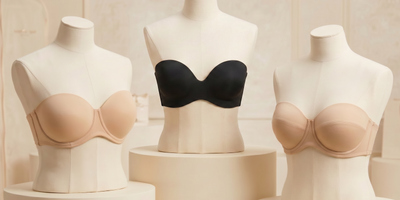
If strapless bras are where the fit feels most confusing, the strapless bra size chart can help you think through band stability, cup depth, and why slipping happens before you choose a strapless style.
If you are unsure where to start, The Bra Diva’s bra size chart can help you compare size starting points. Just remember that the chart is a guide. The final answer still comes from how the bra fits on your body.
When To Try A Different Size, Style, Or Fitting
If your bra is not fitting well, the next step depends on which clues you see.
Once you know which fit clue you are trying to solve, you can compare women’s bras by style, size, and support needs instead of guessing from the size tag alone.
Try A Different Band If The Bra Shifts Or Rides Up
If the band rides up, slides around, or only feels secure when the straps are very tight, the band may be too loose. You may need a firmer band, a different band size, or a style with better anchoring.
Try A Different Cup If You See Spilling Or Empty Space
If breast tissue spills over or pushes out at the sides, the cup may be too small, too shallow, or too narrow.
If the cup gaps, wrinkles, or collapses, the cup may be too large, too tall, too deep, or simply the wrong shape.
Try A Different Style If The Same Problem Keeps Happening
If several sizes give you the same issue, the style may be the problem.
For example, a molded cup may keep gapping because the cup shape does not match you. A plunge bra may not give enough containment for your breast shape. A wireless bra may feel soft but not structured enough for the lift you want. A strapless bra may need a different band or cup construction to stay secure.
Different styles are built for different needs. A sports bra is designed to control movement, a strapless bra needs extra band stability, a wireless bra relies on structure without underwire, and a longline bra may feel more anchored because it extends farther down the body. The right style depends on the fit problem you are trying to solve.
This is where a fitter’s eye can be especially helpful. A different style may solve what another size cannot.
Book A Fitting If You Feel Stuck
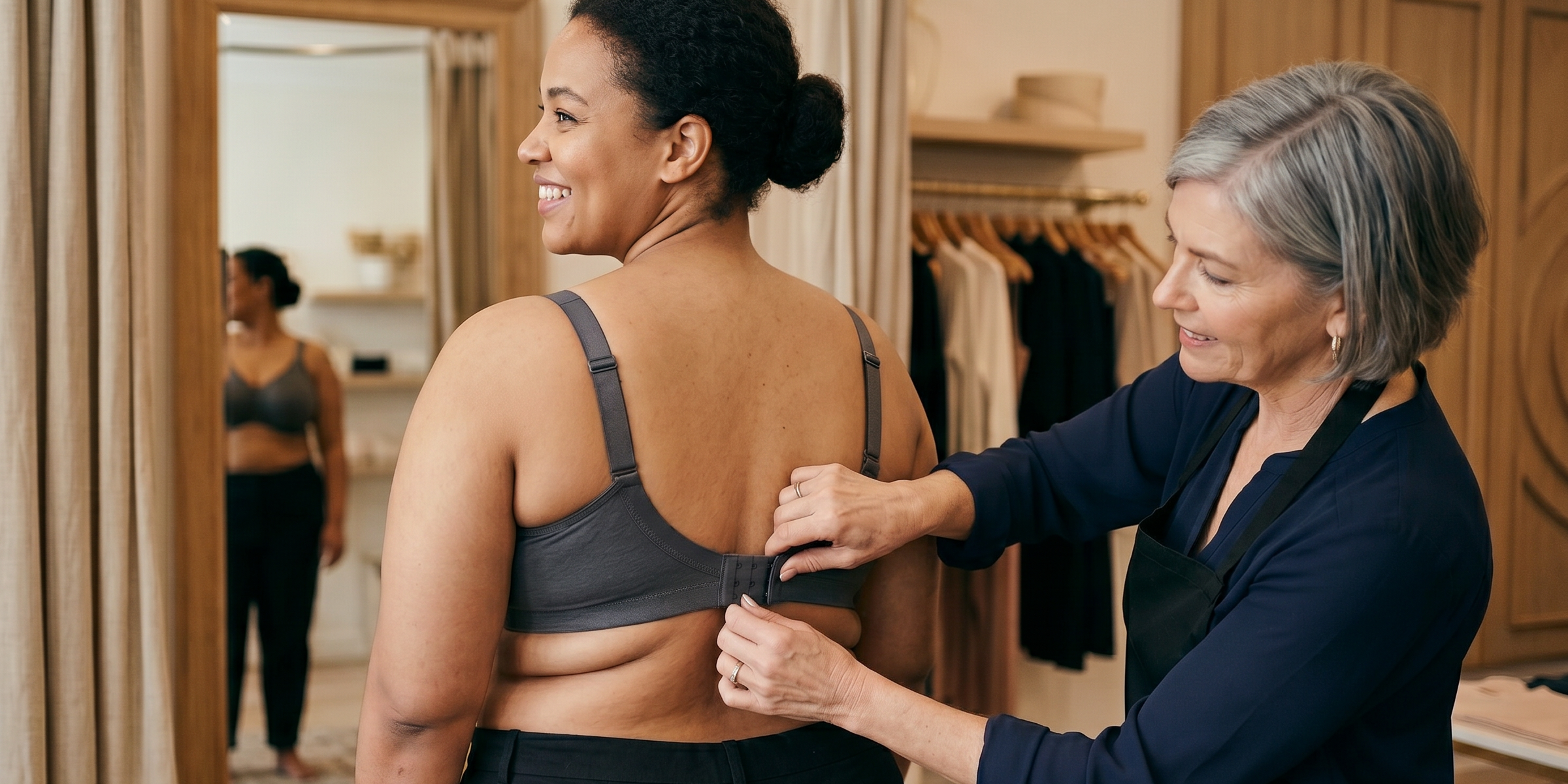
If you are dealing with several fit issues at once, a professional fitting can save a lot of guessing.
Many women wear bras that are not quite right for them, so getting expert help can also save time when you are trying to understand what is actually causing the fit problem.
A fitter can help you compare band sizes, cup shapes, wire widths, and styles in a way that is hard to do alone. This is especially helpful if your body has changed, your usual size no longer works, or you feel like every bra has a different problem.
It can also help to recheck your fit periodically, especially if your body has changed or your usual size no longer feels right.
You can book a fitting appointment with The Bra Diva if you would like more personal help narrowing down your options.
A Simple Bra Fit Checklist

Use this quick checklist the next time you try on a bra:
-
Does the band sit level around your body?
-
Does the band feel firm without feeling painful?
-
Does the bra feel secure on the loosest comfortable hook if it is new?
-
Do the cups contain your breast tissue without spilling?
-
Do the cups sit smoothly without obvious gapping or flattening?
-
Do the straps stay in place without digging?
-
Does the center gore sit close to the body in an underwire style?
-
Does the underwire sit around the breast tissue, not on top of it?
-
Does the bra stay in place when you raise your arms, sit, and move?
-
Can you wear it without constantly adjusting it?
If you answer no to one of these, it does not automatically mean the bra is wrong. It means that area deserves a closer look.
If you answer no to several of them, it may be time to try a different size, a different style, or a fitting.
Bra Fit FAQ
How tight should a bra band feel?
A bra band should feel snug enough to stay level and support the bra without riding up. It should not feel painfully tight, restrict your breathing, or dig sharply into your skin. If the band shifts constantly, it may be too loose. If it feels unbearable, the size, style, or fabric may not be right for you.
Should the center gore always lie flat?
In many underwire bras, the center gore should sit close to the body. If it floats away, the cups may be too small, too shallow, or the wrong shape. However, some body shapes and bra styles fit differently, and wireless bras do not behave the same way as underwire bras. Treat the center gore as one helpful clue, not the only rule.
Why do my bra cups gap even when the bra feels tight?
Cup gapping can happen even when a bra feels tight because the issue may be cup shape, not just cup size. A molded cup may be too tall, too shallow, or too open at the top for your breast shape. A tight band can also make the bra feel small while the cups still do not match your shape well.
Are bra straps supposed to hold the weight?
Bra straps should help stabilize the bra, but they should not carry most of the weight. The band should do the main support work. If your shoulders feel like they are doing everything, check whether the band is too loose, the cups are not supporting well, or the style is not right for your body.
How do I know if I need a bra fitting?
A fitting can help if your band rides up, cups gap or spill, straps dig, wires poke, or every bra seems to create a different problem. It can also help if your body has changed or your usual size no longer feels right. You do not need to know the answer before you come in. A good fitting helps you narrow the options.
Final Takeaway

A good bra fit is not about forcing your body into a size. It is about finding the size, shape, and style that work with your body in real life.
Start with the band. Then check the cups, straps, center gore, underwire, and how the bra feels when you move. Each clue gives you information.
If one thing feels a little off, you may only need a small adjustment. If several things feel wrong, it may be time to compare sizes, try a different style, or get fitted.
If you are ready to explore options, you can browse The Bra Diva’s women’s bras or start with a fitting so you can shop with a clearer sense of what your body needs.