
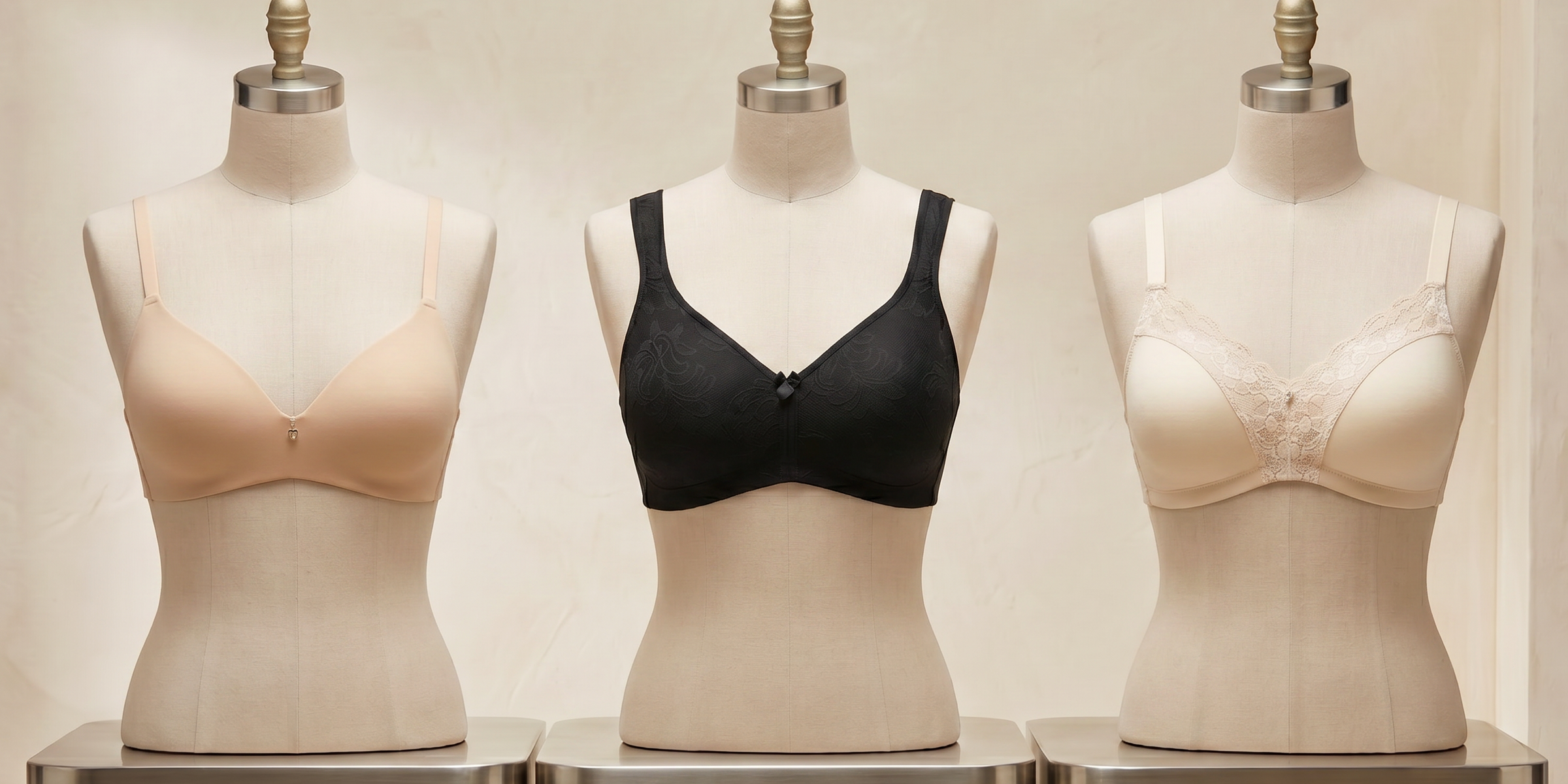
Can Wireless Bras Really Be Supportive? What Fit Details Matter
A wireless bra can sound like the perfect answer when you are tired of wires digging, poking, or feeling too rigid. But many women have tried a soft wire-free bra and found that it felt comfortable for the first few minutes, then offered very little lift or shape as the day went on.
That does not mean wireless bras cannot be supportive. It means the construction matters.
The right wireless bra should still have a strong support system. It may not use an underwire, but it should still rely on a firm band, stable cups, supportive fabric, well-placed seams, and straps that help keep the bra in place. Once you know what to look for, it becomes much easier to tell the difference between a light lounge bralette and a truly supportive wireless bra.
Can Wireless Bras Really Be Supportive?

Yes, some wireless bras can be very supportive. The key word is “some.”
A wireless bra does not have the rigid wire frame that helps an underwire bra lift, separate, and shape the bust. Instead, it has to create support through the rest of the design. That usually means the band, cups, side panels, fabric, seams, and straps all need to work together.
A light, stretchy bralette may feel soft and easy, but it may not give enough support for everyday wear, especially if you have a fuller bust or need more lift. A structured wireless bra, on the other hand, may have deeper cups, a firmer band, wider straps, side support, or inner support panels that help the bust feel more secure.
The goal is not to find a wireless bra that magically behaves exactly like an underwire. The goal is to find one that gives you the level of support, comfort, and shape you actually need for your body and your day.
What Actually Supports You In A Wireless Bra?
When there is no wire, the rest of the bra has to do more work. If you are shopping for wireless bras, these are the fit and construction details worth checking first.
A Firm Band That Stays In Place
The band is still the foundation of the bra. In a wireless style, this becomes even more important because there is no wire helping anchor the cups against the body.
A supportive wireless band should feel firm, level, and secure around your ribcage. A wider or more substantial band can also help spread support more comfortably around the body instead of concentrating pressure in one small area. It should not ride up your back, roll under the bust, or shift every time you move. If the band is too loose, the bra may feel soft but will not have a stable base for support.
That does not mean the band should feel painfully tight. A good band should feel comfortably snug, not restrictive. You should be able to move, breathe, sit, and reach without feeling like the bra is fighting you.
If you often notice your band moving around, it may help to review the basics in our guide to why your bra band rides up.
Cups With Enough Depth And The Right Coverage
Cup shape and cup size matter just as much in a wireless bra as they do in an underwire bra.
If the cups are too shallow, they may flatten the bust, push tissue toward the underarm, or create spillage near the neckline. If the cups are too roomy or too tall for your shape, they may collapse or gap. The right cup size can help create a more secure, comfortable fit, but cup shape still matters too. A supportive wireless bra should contain the bust without squashing, folding, or leaving large empty areas.
For many women, especially fuller-bust shoppers, cup depth is one of the biggest differences between a light bralette and a more supportive wireless bra. Deeper cups can give breast tissue more room to sit naturally, which often helps the bra feel more secure. The goal is a comfortable fit that supports without forcing the bust into the wrong shape.
If cup shape is a frequent issue for you, our guide to why bra cups gap at the top can help you separate size issues from style or shape mismatch.
Seams, Side Panels, And Inner Support
A wireless bra may use seams, fabric panels, supportive fabrics, and inner support pieces to create lift without wires and a thoughtfully designed shape.
These details may not be obvious at first glance, but they can make a big difference. For example, a multi-part cup can help guide the bust upward and forward. A side support panel can help keep breast tissue from spreading too far toward the underarm. A taller center front can help the bra feel more contained.
Smooth, seamless wireless bras can be comfortable, but they may not always provide the same shaping or structure as a seamed wireless style. That does not make one better than the other. It simply depends on what you want the bra to do.
If your priority is softness under casual clothes, a smoother style may be enough. If your priority is more lift, containment, or fuller-bust support, look closely at how the cup is built, since these internal details are what allow some wireless bras to deliver lift, shaping, and comfort for daily wear. A smooth wireless style can also work especially well under a fitted T-shirt when you want less visible texture.
Straps That Stabilize Instead Of Carrying Everything

Straps matter, but they should not be doing all the work.
In a supportive wireless bra, the straps help stabilize the cups and keep the bra sitting correctly. They should not be the only reason your bust feels lifted. If you have to tighten the shoulder straps until they dig into your shoulders, the band or cup may not be giving enough support, since the straps should help stabilize without carrying all the weight.
Wide straps can feel more comfortable for some shoppers, especially in fuller cup sizes, but strap width alone does not make a wireless bra supportive. The band and cup still need to hold the bust securely.
A good test is to adjust the straps so they feel secure but not tight. For some shoppers, slightly wider shoulder straps can help reduce digging. If the whole bra drops, shifts, or loses shape, the support may not be coming from the right place.
Wireless Bras, Wire-Free Bras, Soft Cup Bras, And Bralettes Are Not All The Same
A lot of shoppers use these terms interchangeably, but they are not always the same.
A wireless bra or wire-free bra simply means the bra does not have an underwire. Within that category, non-wired bras can range from minimal lounge styles to more supportive everyday options. Some wireless bras are light, stretchy, and minimal. Others are more structured, with shaped cups, firm bands, side support, and adjustable details.
A soft cup bra usually refers to a soft bra without molded or rigid cups, though some soft cup styles can still be structured and supportive. A bralette is often lighter, softer, and less structured, although some bralettes with support are built with more practical support than traditional fashion bralettes.
This distinction matters because a shopper may try one flimsy bralette and assume no wireless bra can work for her. In reality, she may simply need a more structured wire-free style.
If you want something soft for lounging, a relaxed bralette may be ideal. For example, a soft cotton bra can feel light and easy for everyday wear, but it is still different from a more structured wireless bra. If you want a bra you can wear through a full day, look for a wireless style that has a secure band, shaped cups, and enough fabric strength to stay in place.
Who Usually Does Well In A Wireless Bra?
Wireless bras can be a good option for many different shoppers, but the best match depends on your body, your outfit, and your support expectations.
You may like a wireless bra if you want a softer feel around the ribcage, prefer not to wear wires every day, or need a comfortable option for casual dressing. Some women also like wireless bras during size changes because the softer structure can feel more forgiving than a rigid wire.
Wireless styles can also be useful for:
-
Everyday comfort when you do not need maximum lift
-
Lounging or working from home
-
Travel days
-
Casual outfits
-
Sensitive ribs or wire discomfort
-
Softer shaping under relaxed clothing
-
Backup bras between underwire days
For fuller busts, wireless can still be possible, but the details matter more. A supportive wireless bra for a fuller bust usually needs more than stretch fabric and thin straps. Look for a firm band, deeper cups, side support, adjustable straps, and enough coverage to keep the bust contained.
If you are shopping in a fuller size range, browsing wireless support bras for large breasts can be a better starting point than choosing a light bralette designed mainly for minimal support.
When An Underwire May Still Be The Better Choice

Wireless bras are not automatically better than underwire bras. They are simply different.
An underwire can help define the cup shape, separate the bust, and anchor the breast tissue more precisely. If you want strong lift, a very defined shape, or more separation under fitted clothing, an underwire may still be the better choice.
That is especially true if you have tried several wireless bras and they all feel like they are letting the bust sit too low, spreading too wide, or losing shape by midday. In that case, the issue may not be your body. It may simply be that a wireless bra is not giving the structure you want for that outfit or support need.
A good bra wardrobe can include both. You may prefer underwire bras for work, special outfits, or days when you want more shaping, and wireless bras for softer everyday comfort.
The best choice is not about proving one style is better. It is about matching the bra to the job you need it to do.
How To Check The Fit Of A Wireless Bra
When you try on a wireless bra, do not judge it only by how soft it feels at first. Move around in it and check whether it still supports you after a few minutes.
Start with the band. It should sit level around the body and feel secure on the loosest comfortable hook when the bra is new. If the band rides up, rolls, or shifts, the bra may not have enough anchor.
Next, look at the cups. They should contain the bust without major spilling, flattening, or gaping. The fabric should feel smooth and stable, not collapsed or strained.
Then check how the bra feels when you move. Raise your arms, sit down, turn side to side, and take a few steps. A supportive wireless bra should stay reasonably in place. It should not require constant adjustment.
Here is a simple wireless bra fit checklist:
-
The band sits level around your body.
-
The band feels firm but not painful.
-
The cups contain breast tissue without major overflow.
-
The cups do not collapse, wrinkle heavily, or flatten the bust uncomfortably.
-
The bottom of the bra does not roll under the bust.
-
The straps stabilize the bra without digging.
-
The bust feels supported enough for the way you plan to wear the bra.
-
The shape works under the clothing you have in mind.
If several of these checks fail, it may be a size issue, a style issue, or both. If you are not sure where to start, our bra size chart can help you compare sizing starting points, but fit still depends on the brand and style.
What To Look For If You Have A Fuller Bust
If you have a fuller bust, wireless bras can be more challenging, but they are not automatically off the table. Some modern wireless bras can work well in fuller cup sizes when the structure is strong enough, though many bras marketed as wireless are still too light for fuller support needs.
The most important thing is structure. A wireless bra for fuller cups usually needs a firmer foundation than a light stretch bralette, with extra support built into the band, cups, and internal construction rather than relying on straps alone. The band should feel stable. The cups should have enough depth. The straps should be adjustable. The fabric should have enough strength to hold its shape.
Helpful details may include:
-
A wide band or reinforced band
-
Multi-part cups
-
Side support panels
-
Higher coverage
-
A taller center front
-
Stronger fabric
-
Fully adjustable straps
-
Wider straps for comfort
-
A back design that helps distribute tension
For fuller busts, avoid judging a wireless bra only by how it looks on the hanger. Some styles that look simple may have hidden support features, while some pretty bralettes may not have enough structure for all-day wear.
If your bust feels like it is dropping, spreading too far sideways, or pulling the bra forward, the style may not be supportive enough. A different wireless shape may help, but an underwire may still be more effective for certain outfits or support needs.
If you are choosing between wireless and underwire because of discomfort, it may also be worth checking whether your current underwire bra is the right size and shape. Sometimes the wire is not the real problem. The problem is that the wire is sitting in the wrong place.

FAQ: Wireless Bras With Support
Are wireless bras supportive enough for everyday wear?
Some wireless bras are supportive enough for everyday wear, but it depends on the design and your support needs. Look for a style that combines softness with real structure instead of relying on stretch alone. A firm band, stable cups, adjustable straps, and enough coverage can help keep the bra in place. A light bralette may feel comfortable but may not give the same support as a structured wireless bra.
Can wireless bras work for large breasts?
Wireless bras can work for some fuller-bust shoppers, especially when the bra has a strong band, deep cups, side support, and supportive fabric. However, not every wireless bra is built for fuller cup sizes. If you need strong lift, separation, or shaping, an underwire may still be the better choice.
What is the difference between a wireless bra and a bralette?
A wireless bra simply means the bra does not have an underwire. A bralette is usually a softer, lighter, less structured style. Some bralettes have a barely there feel for lounging or layering, while others are designed with more support. If you want everyday support, look for construction details such as a firm band, stable cups, adjustable straps, and supportive fabric rather than relying only on the category name.
Should a wireless bra feel tight?
A wireless bra should feel firm enough to stay in place, but it should not feel painful or restrictive. The band should feel comfortably snug around the ribcage. If the bra digs, rolls, or makes it hard to move comfortably, the size or style may not be right.
Is a wireless bra better than an underwire bra?
A wireless bra is not automatically better than an underwire bra. Wireless styles can feel softer and more relaxed, while underwire styles often provide more defined lift, separation, and shape. The better choice depends on your body, your comfort preferences, and what you need the bra to do.
Find The Wireless Bra That Matches Your Support Needs
A good wireless bra should not make you choose between softness and support without knowing your options. The goal is finding a supportive wireless bra that feels right for how you actually plan on wearing it.
If you want a softer everyday option, start with supportive wireless bras that have a firm band and enough cup structure for your shape. If you have a fuller bust, look for styles built with more coverage, cup depth, and side support.
And if you are not sure whether wireless, underwire, or a different bra style is the right next step, a professional fitting can help you compare options more clearly. You can book a fitting appointment with The Bra Diva for more personalized help.