Table of Contents
- The Best Way To Wash Bras Without Ruining The Fit
- Why Bra Washing Affects Support
- How To Hand Wash Bras Step By Step
- Can You Wash Bras In The Washing Machine?
- How To Dry Bras The Right Way
- How Often Should You Wash Your Bras?
- Should You Wash A New Bra Before Wearing It?
- How To Wash Molded Cup Bras
- How To Store Bras After Washing
- Common Bra Washing Mistakes To Avoid
- When Washing Will Not Fix The Fit
- A Simple Bra Care Routine That Works
- Bra Washing FAQs
Best Bra Styles For Large Breasts: How To Choose Support Without Guessing
If you have a larger bust, you probably already know that not every “supportive bra” feels supportive in real life.
Some bras look strong on the hanger but pull on your shoulders after a few hours. Some feel secure when you first put them on, then start shifting, spilling, or riding up by lunchtime. Some cover everything but flatten your shape in a way you do not like. Others feel soft and comfortable, but do not give you the lift or stability you were hoping for.
That is why the best bra styles for large breasts are not just the styles with the most fabric or the tightest straps. A supportive bra usually comes down to structure: the band, cup depth, wire shape, seams, fabric, strap placement, and how the style matches your breast shape.
Here is how to choose large-bust bra styles with more confidence and less guessing.
Best Bra Styles For Large Breasts Start With Support, Not Guesswork
For larger breasts, the best bra style is usually the one that gives you the right kind of support for your body and your wardrobe.
That may mean a full coverage bra for everyday containment. It may mean an underwire bra for lift and separation. It may mean a side support bra if your tissue tends to move outward. It may mean a structured wireless bra if comfort is your priority. It may mean a sports bra for movement control or a strapless bra for a specific outfit.
The key is not choosing one “best” style for every larger bust. The key is learning what each style is built to do.
If you already know you want to browse supportive options, start with bras for large breasts. If you are still deciding which style makes the most sense, the sections below will help you narrow it down.
What Makes A Bra Supportive For Large Breasts?

Before looking at specific styles, it helps to understand what real support usually comes from.
A supportive bra for larger breasts should not rely only on tight straps or extra coverage. It should give the bust a stable base, enough room in the cups, and a shape that works with your breast tissue instead of fighting against it.
A Firm, Level Band
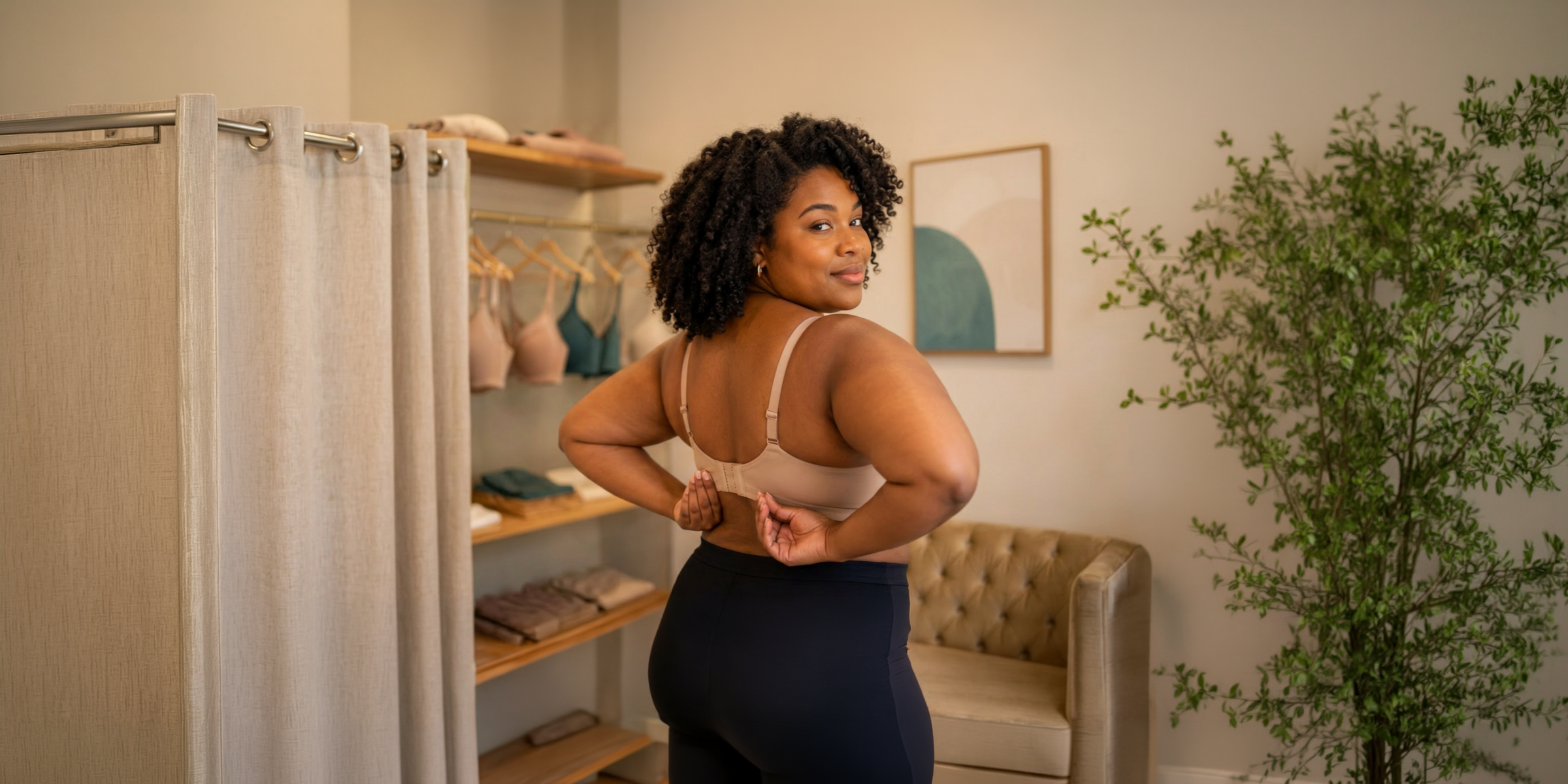
The band is the anchor of the bra. It should sit level around the body and feel firm enough to stay in place without digging sharply or riding up. A new bra should usually feel secure on the loosest hook, so you have room to tighten it as the band relaxes over time.
When the band is too loose, the bra often loses its support from below. Many women respond by tightening the straps, but that usually shifts pressure to the shoulders instead of solving the real problem.
If your band creeps up in the back, the first thing to check is usually the band fit, not the strap length. A larger bust needs that band to stay steady because the band is doing most of the supporting work.
Cups With Enough Depth And Containment
For larger breasts, cup size matters, but cup shape matters too, especially in larger cup sizes.
A cup can technically be large enough and still feel wrong if it is too shallow, too wide, too tall, or not deep enough where your tissue needs room. You want the cup to contain breast tissue without cutting in, spilling over, flattening, or leaving empty space, with a shape that gives your breast tissue room where you actually need it.
This is why two bras in the same size can feel completely different. One may have deeper cups and stronger seams. Multi-part cups can often shape and lift more effectively because the seams help support the cup in specific areas. Another bra in the same size may have a shallow molded shape that looks smooth but does not match your breast shape.
Straps That Stabilize Instead Of Doing All The Work
Straps matter, especially for comfort and stability. Adjustable straps can help fine-tune the fit, and wider or cushioned straps may feel better on the shoulders.
But straps should not be doing all the supporting work.
If your straps dig into your shoulders, it may be tempting to look only for wider straps. Wider straps can help with comfort, but shoulder pressure often means the band is not anchoring properly or the cups are not supporting the breast tissue well.
A good strap should help keep the cup in place. It should not feel like the only thing holding the bra up.
Seams, Wires, And Fabric Structure
For larger breasts, construction can make a big difference.
Seamed cups often provide more shaping and lift because the seams help direct and support the breast tissue. Underwire bras can help with lift and separation when the wire shape is right. When fitted well, underwire bras can be one of the strongest options for lift and separation.
Supportive construction for a larger bust may also include deeper cups, firmer fabrics, side support panels, inner slings, or stronger cup seams that help the bra hold its shape during the day.
A soft bra can still be supportive, but it needs some kind of structure. That may come from the band, cup panels, inner slings, side support, seaming, or firmer materials.
Full Coverage Bras: Best When You Want Containment

Full coverage bras for large breasts are often a strong starting point because they give more cup coverage and help contain breast tissue through the top and sides of the cup.
A good full coverage bra can help when you want:
-
More containment through the neckline
-
Less movement during the day
-
A secure everyday fit
-
A smoother look under higher-neck tops
-
More confidence that the bust is staying inside the cup
Full coverage does not automatically mean better support, though. The cup still needs the right depth, wire shape, and band fit. If the cup is too tall for your breast shape, it may gap at the top. If it is too shallow, it may flatten the bust or push tissue toward the sides.
Think of full coverage as a useful style category, not a guarantee. It works best when the coverage matches your shape and the band stays firm and level.
Underwire Bras: Best When You Want Lift And Separation
Underwire bras are often helpful for larger breasts because the wire can help lift, separate, and define the bust.
A well-fitting underwire should sit around the breast tissue, not on top of it. The center gore, which is the piece between the cups, should usually sit close to the body in many underwire styles. If the gore floats away, the cups may be too small, too shallow, or the style may not be right for your shape.
Underwire can be a very good choice if you want:
-
More lift from below
-
Better separation between the breasts
-
A more defined shape
-
Support for everyday wear
-
A stable fit under fitted clothing
That said, underwire is not the only option for every larger bust. Some women prefer wireless bras for comfort, especially at home or for softer outfits. The important thing is not whether the bra has a wire. The important thing is whether the style gives you enough structure in the right places.
Side Support Bras: Best When You Want A More Centered Shape

Side support bras can be especially helpful if your breast tissue tends to move outward toward the underarm area or if you prefer a more centered shape under clothing.
These bras often use side panels, inner slings, or seamed cup construction to help guide breast tissue forward. For larger breasts, that can make the bra feel more secure and give a cleaner shape under tops.
Side support bras for large breasts may be worth trying if:
-
Your bust tends to sit wider in some bras
-
You feel like your cups push tissue toward your arms
-
You want a more lifted, centered look
-
You need more structure than a basic molded cup provides
-
You prefer support that feels built into the cup, not just the straps
Side support does not need to feel rigid or restrictive. In the right size and shape, it can simply make the bra feel more intentional.
T-Shirt Bras: Best When You Want A Smooth Look Under Clothes
T-shirt bras are designed to create a smooth look under fitted tops. For larger breasts, they can be very useful, but they can also be tricky.
Many T-shirt bras use molded cups. A molded cup holds its own shape, which can be helpful under thin fabrics. But if that molded shape does not match your breast shape, the cup may gap, flatten, or feel too shallow.
A T-shirt bra may work well if:
-
You want a smooth cup under knits or fitted tops
-
The cup has enough depth for your breast tissue
-
The wire follows your shape comfortably
-
The band feels firm without riding up
-
The cup does not collapse, gap, or press the bust flat
If you often find that molded cups gap at the top, it may not mean you need a smaller cup. You may need a different cup shape, a different style, or a seamed cup that works better with your natural shape.
For large breasts, a smooth look is helpful only if the fit underneath is doing its job.
Minimizer Bras: Best When You Want A Reduced Forward Profile

Minimizer bras for large breasts are designed to redistribute the bust so it appears less projected from the side. They can be helpful under button-down shirts, tailored jackets, uniforms, or outfits where you want a slightly reduced forward profile.
A good minimizer should feel controlled, not crushed.
It may be worth trying a minimizer if:
-
Button-down shirts pull or gap at the bust
-
You want a smoother line under tailored clothing
-
You prefer less forward projection
-
You want containment without heavy padding
-
You like a more distributed shape under certain outfits
A minimizer should not painfully flatten the breast tissue or push it into the underarm area. If it feels too tight, too wide, or restrictive, the style may not be right for your shape.
Also, a minimizer does not actually make your breasts smaller. It changes how the bust is shaped and distributed under clothing. That difference matters because the goal should be comfort and control, not compression for its own sake.
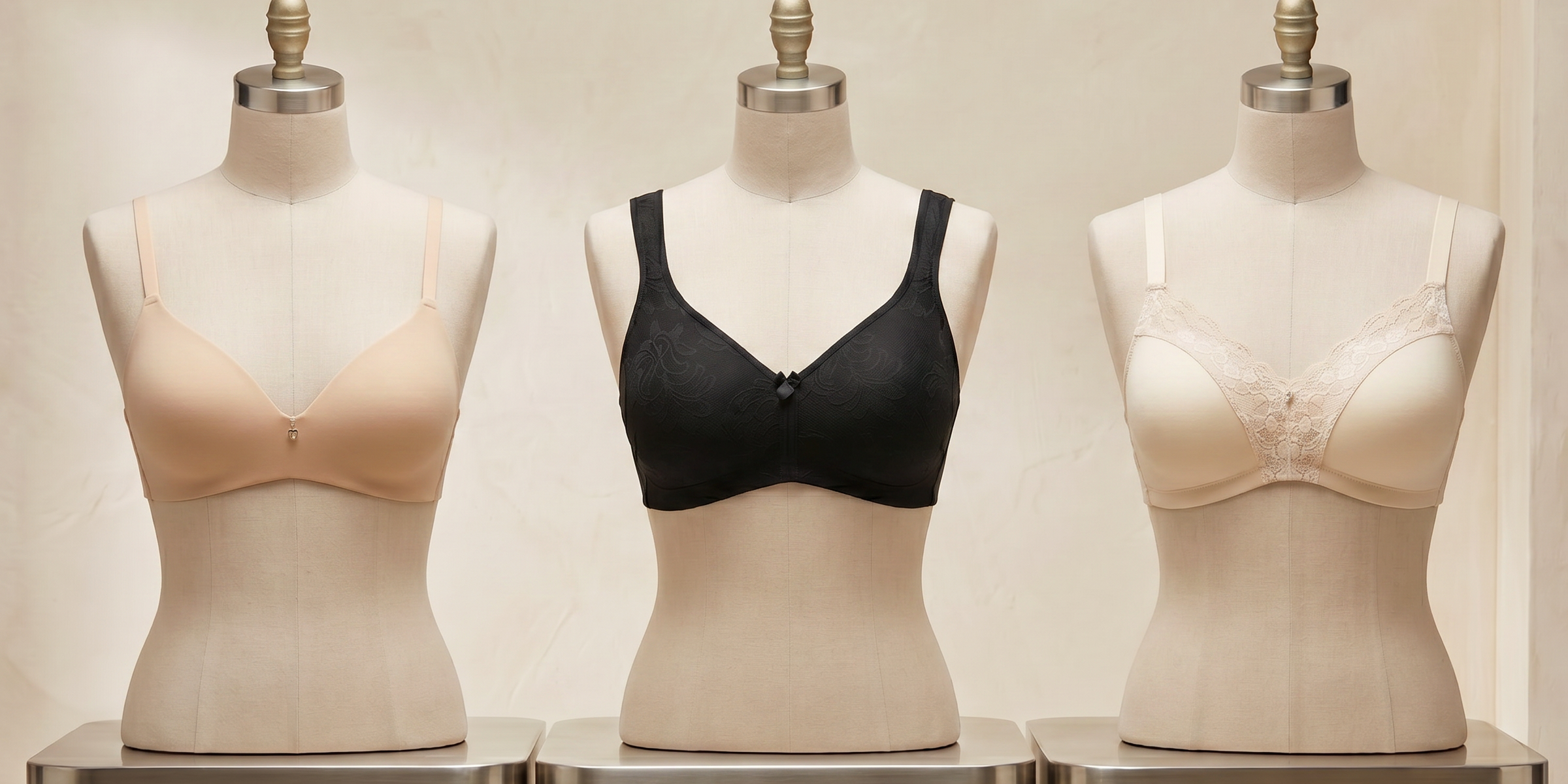
Wireless Bras: Best When You Want Softness With Structure
Wireless support bras for large breasts can work well, but the right construction matters.
A wireless bra for a larger bust should not be just a soft triangle of fabric with stretchy straps. Modern wireless bras may use thoughtful construction to provide support without an underwire, including a firm band, supportive cups, stable fabric, seams, inner support panels, or a wide underbust area that helps replace some of the structure an underwire would normally provide.
Wireless styles may be useful if:
-
You want a softer feel for everyday wear
-
You dislike the feeling of underwire
-
You want a comfortable option for home, travel, or casual days
-
You need support but prefer less rigid structure
-
You want a gentler feel without giving up all shaping
The main thing to watch is whether the bra keeps the bust lifted and centered enough for your needs. If a wireless bra feels comfortable but lets the bust sink, spread, or move too much, it may be too soft for the support level you want.
Softness is lovely. For larger breasts, softness works best when it still has a support plan.
Sports Bras: Best When Movement Control Matters

Everyday bras and sports bras for large breasts are not trying to do the same job.
A sports bra for larger breasts needs to control movement, not just cover the bust. Depending on the activity, many larger busts need encapsulation, not just compression, or a combination of both.
Compression holds the bust closer to the body. Encapsulation supports each breast more separately, often with defined cups. Encapsulation cups can help reduce bounce because each breast is supported more separately. Many larger-bust shoppers prefer a sports bra that includes encapsulation or a hybrid of compression and encapsulation because it can feel more controlled without simply pressing everything flat.
When choosing a sports bra, look at:
-
Impact level
-
Band firmness
-
Cup containment
-
Strap adjustability
-
Bounce control
-
Breathable but stable fabric
-
Whether the bra separates, compresses, or does both
For walking, yoga, or lower-impact movement, you may not need the same support as running or high-impact training. For higher-impact activity, a casual wireless or everyday bra usually will not be enough.
The best sports bra is not just the tightest one. It is the one that controls movement without making you feel squeezed in the wrong places.
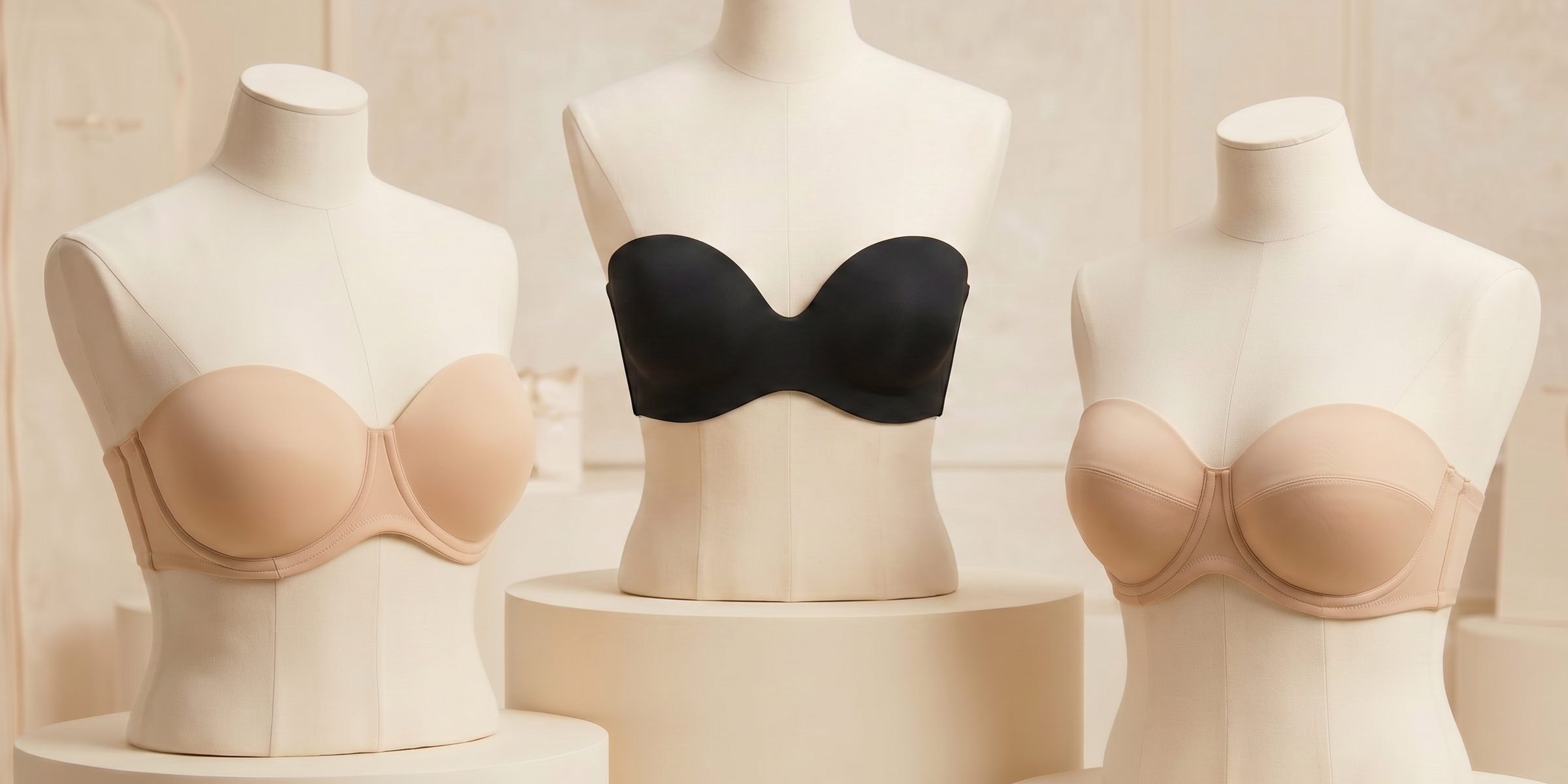
Strapless Bras: Best For Special Outfits, But Fit Has To Be Precise
Strapless bras for large busts ask more from the band than almost any other bra style. Since the straps are not there to stabilize the cups, the band and cup structure have to work harder.
For larger breasts, a strapless bra should feel firm and secure around the body. Some strapless bras use silicone grip, wider bands, or extra hook-and-eye rows to help the bra feel more secure. It should not slide down, fold, gap, or require constant pulling up. The cups should contain the bust without pushing tissue over the top or out toward the sides.
A strapless bra may be useful for:
-
Strapless dresses
-
One-shoulder tops
-
Off-the-shoulder outfits
-
Formalwear
-
Special occasion clothing
Because the fit has to be more precise, it is normal for strapless bras to feel firmer than everyday bras. Firm is expected. Painful, slipping, or unstable is not.
If you are choosing a strapless bra for an important outfit, try it with the actual clothing if possible. The outfit neckline, fabric, and structure can change what style works best.
How To Choose The Right Style For Your Body And Wardrobe

Once you understand what each style does best, choosing the right bra becomes much easier.
Start with the problem you are trying to solve. Finding a better bra gets easier when you match the style to your shape, your support needs, and the way you plan to wear it.
If you want everyday security, try full coverage, side support, or structured underwire styles. If you want a smooth look under fitted tops, try a T-shirt bra, but pay attention to cup depth and shape. If you want softness, look for a wireless bra with real structure. If you want less forward projection under clothing, try a minimizer. If you need movement control, choose a true sports bra by activity level. If you need support under a special outfit, fit the strapless bra carefully before the day you plan to wear it.
Some shoppers also like balconette bras for large breasts or plunge bras for large breasts, especially when the cup depth, coverage level, and wire shape suit their body and outfit. These styles can be useful, but they still need the same basic support ingredients: a steady band, cups that contain the breast tissue, and straps that stabilize instead of doing all the work.
Also, do not assume that one size will feel the same across every brand and style. Your size is a starting point, not the whole fit story, and even the correct size can vary a bit by brand and style. A 36G in one brand may not feel the same as a 36G in another, especially if one brand uses a different sizing system or cup shape.
If you are unsure where to start, use the bra size chart as a guide, then let the actual fit decide. The right style should support your shape, your clothing, and your comfort needs.
Common Mistakes When Shopping For Large-Bust Bras

A lot of large-bust bra frustration comes from choosing based on one fit detail instead of the whole bra.
Many shoppers use “large bust” or “full bust” to describe DD cups and above, but support needs still depend on band size, cup shape, breast shape, and style. That is why the same style may feel supportive on one person and not supportive enough on another.
Here are the most common mistakes to watch for.
Choosing A Bigger Cup Without Checking The Band
If the bra does not feel supportive, many shoppers go straight to a larger cup. Sometimes that is the right move, but not always.
If the band is too loose, a bigger cup will not fix the support problem. The bra may still ride up, shift, or make the straps work too hard.
Check the band first. It should sit level and feel steady.
Tightening The Straps To Create Lift
Tightening the straps may create a quick lift, but it often causes shoulder pressure and does not solve the underlying fit issue.
If the band and cups are doing their job, the straps should only need moderate adjustment. If you have to tighten them aggressively, the bra may need a different band size, cup shape, or style.
Assuming Full Coverage Always Means Supportive
Full coverage can be helpful, but coverage alone is not support.
A full coverage bra that is too shallow, too tall, or too loose in the band can still feel wrong. Look for structure, depth, and a steady band, not just more fabric.
Buying A Molded Bra That Is Too Shallow
Molded T-shirt bras are popular because they look smooth under clothes. But if the cup is too shallow, it may push the bust down, flatten the shape, or gap at the neckline.
If molded bras often feel wrong, do not assume your body is difficult to fit. You may simply need a different cup shape or a seamed style.
Choosing Wireless Styles That Are Soft But Not Structured
Wireless bras can be comfortable, but larger breasts often need more than softness.
Look for a band that feels secure, cups that hold their shape, and construction that keeps the bust supported. A wireless bra can be soft and structured at the same time.
Expecting One Bra To Do Everything
The bra that works beautifully under a fitted T-shirt may not be the bra you want for a workout. The bra you love for home may not give enough shape under a tailored dress. The strapless bra that saves one outfit may not be the bra you reach for every day.
Most women need a small wardrobe of bras for different needs. That is especially true when you have a larger bust and the support demands change by outfit and activity.
When A Fitting Can Help

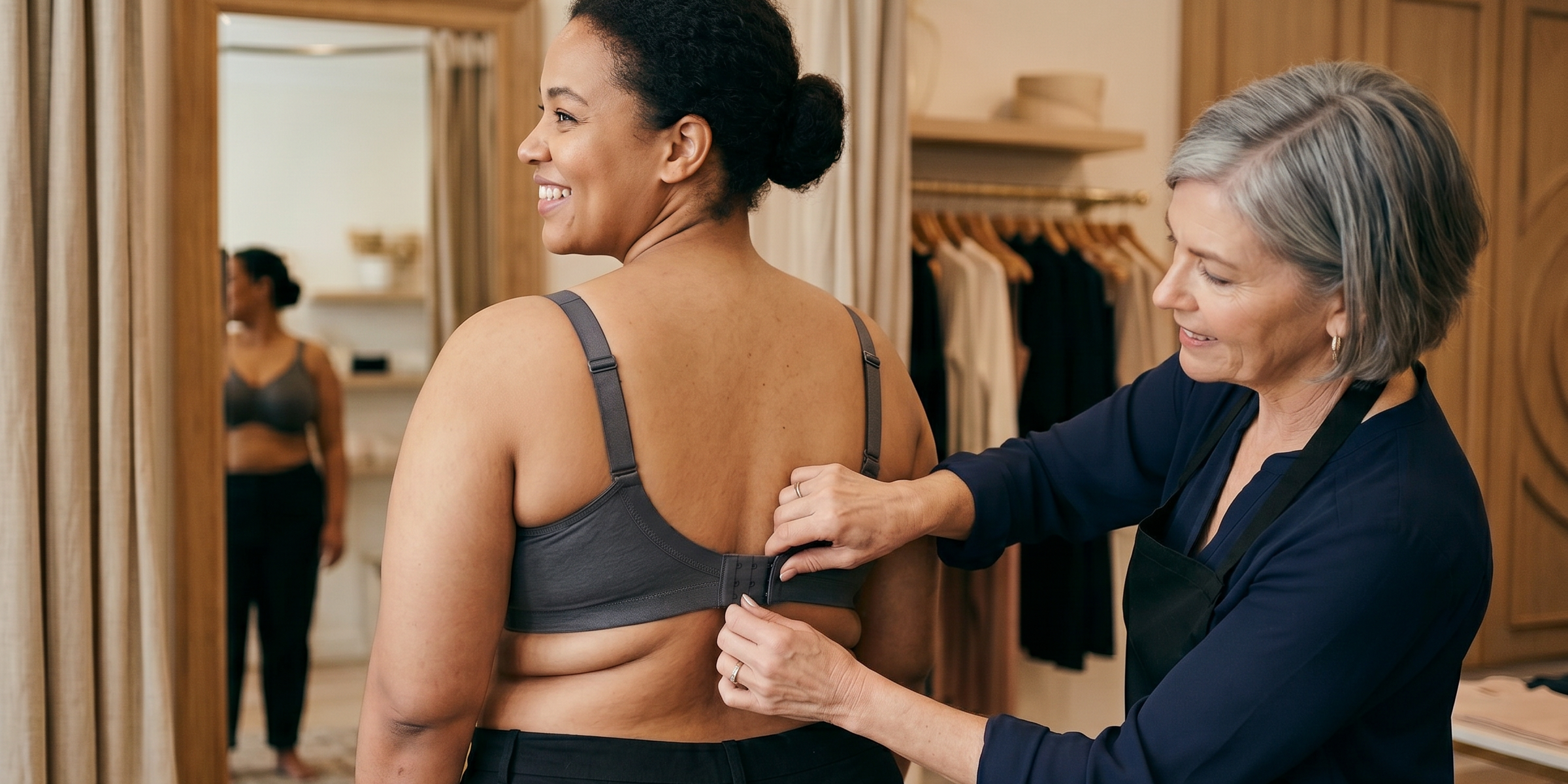
If you have tried several supportive bras and they all feel close but not quite right, a fitting can save a lot of guessing. It can also help you understand your shape and match it to styles that are more likely to give you the support you want.
A fitter can help you compare band firmness, cup depth, wire width, strap placement, and style type in a more practical way, which is especially helpful when shopping extended sizes. Sometimes the answer is a different size. Sometimes it is a different cup shape. Sometimes it is a style you would not have picked on your own.
For more personalized help, you can book a fitting appointment with The Bra Diva. A good fitting should make the options feel clearer, not more overwhelming.
FAQs About Bra Styles For Large Breasts
What type of bra is best for large breasts?
The best type depends on what you need the bra to do. For everyday support, many larger-bust shoppers start with full coverage, side support, seamed underwire, or other structured styles. Some shoppers also like balconette or plunge bras when the cup shape and coverage level suit their body and outfit. If comfort is the priority, a structured wireless bra may be a better choice. If movement control matters, choose a true sports bra by impact level.
Are underwire bras better for large breasts?
Underwire bras can be very helpful for lift and separation, but they are not the only option. When the fit is right, the wire should sit comfortably around the breast tissue rather than on top of it. A well-structured wireless bra may work better for some shoppers, especially for softer everyday comfort.
Can wireless bras support large breasts?
Yes, wireless bras can support larger breasts when the construction is strong enough. Look for a firm band, supportive cups, stable fabric, and construction details such as seams or inner support panels. A wireless bra that is soft but too stretchy may feel comfortable at first but may not give enough lift or control.
Are minimizer bras good for large breasts?
Minimizer bras can be helpful if you want a reduced forward profile under clothing, especially under button-down shirts or tailored pieces. A good minimizer should redistribute shape comfortably. It should not painfully flatten the bust, push tissue into the underarm, or make you feel restricted.
Should I size up if my bra does not support my larger bust?
Not automatically. Poor support can come from a loose band, shallow cups, the wrong cup shape, or a style that does not match your needs. Before sizing up, check whether the band is level, the cups fully contain your breast tissue, and the straps are not doing all the work.
The Bottom Line
The best bra styles for large breasts are the styles that combine structural support with the right fit need.
Full coverage can help with containment. Underwire can help with lift and separation. Side support can help center the bust. T-shirt bras can create a smoother look. Minimizers can reduce forward projection. Wireless bras can offer softness with structure. Sports bras can control movement. Strapless bras can support special outfits when the band and cup fit are precise.
The goal is not to force your body into one “correct” style. The goal is to understand what each style is designed to do, then choose the one that supports your shape, your clothing, and your real life.