What Is a Bra Center Gore, and Should It Sit Flat?
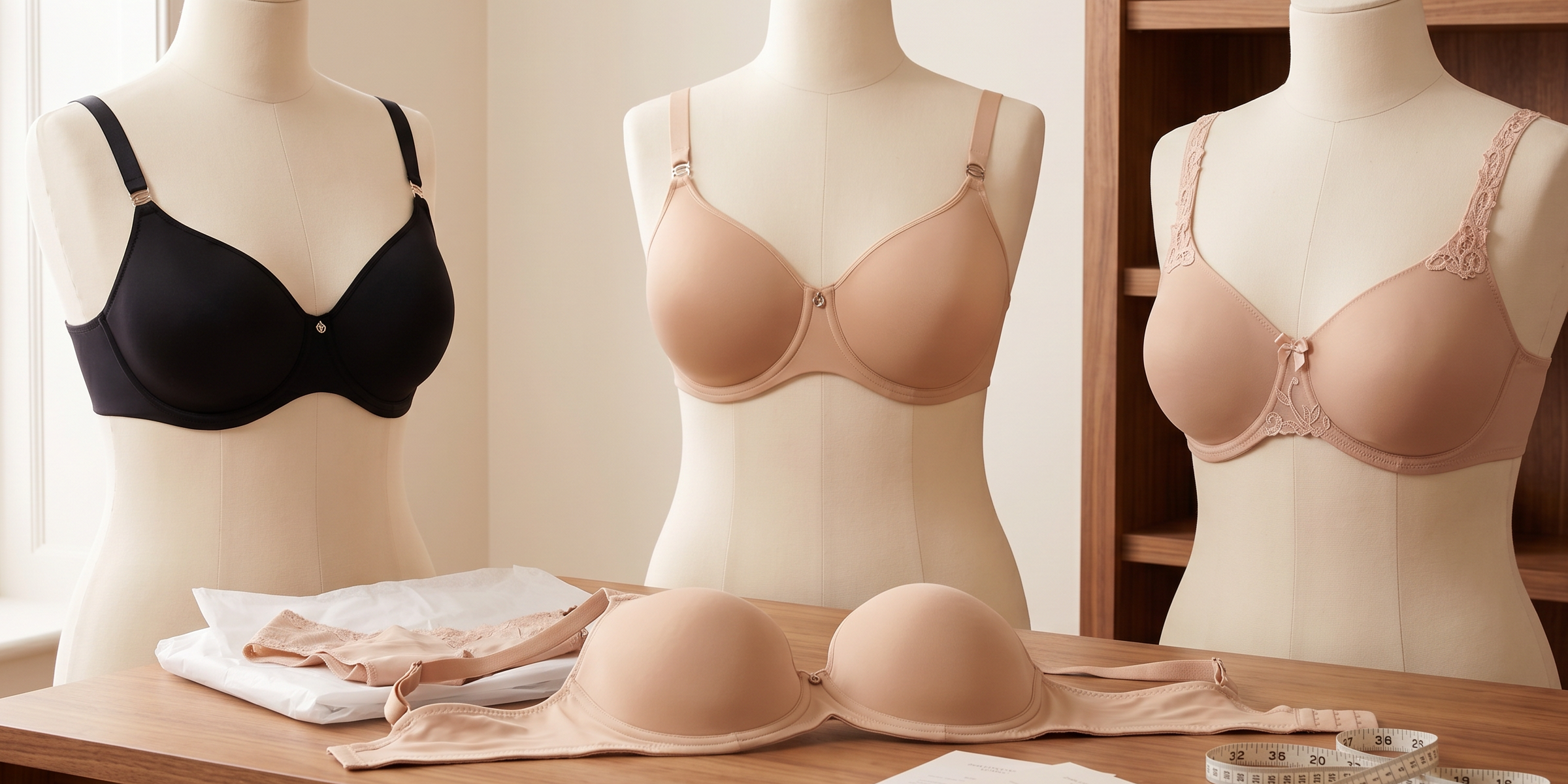
If you have ever looked down and noticed the middle of your bra floating away from your chest, you are not the only one. The center gore is the piece of fabric between the cups at the front of a bra, and in many underwire styles it connects the cups, helps hold the wires in place, separates the breasts, and stabilizes the front of the bra.
That small center panel can tell you a lot about bra fit, but it is also one of the easiest fit clues to misunderstand. A center gore that floats, pokes, or sits differently from one bra to another may point to cup depth, wire shape, band stability, or style mismatch. The goal is not to force every bra to follow one rigid rule. It is to understand what the gore is doing, how the rest of the bra fits, and what might help the bra feel more secure and comfortable on your body.
Quick Answer: What Is a Center Gore?

The center gore is the piece of fabric between the cups at the front of your bra. Some people call it the “bra gore,” the “center panel,” or simply “the middle part” of the bra.
On an underwire bra, the bra center gore usually connects the two cups and helps hold the underwires in place. It can also help separate the breasts, stabilize the front of the bra, and give the cups a more secure starting point.
On wireless bras, bralettes, and other soft styles, the center area may be more flexible. Because there is no underwire anchoring each cup, the center gore may not behave the same way it does in a structured underwire bra.
That is why center gore fit is helpful, but it needs context.
Should the Center Gore Sit Flat?
In many well-fitted underwire bras, the center gore is meant to sit flat or close against the body between the breasts. Fitters sometimes call this “tacking.” When the gore sits close, it can be a sign that the cups have enough room, the wires are sitting in a good place, and the bra is not being pushed away from the body.
When a bra “tacks,” it usually means the center gore is sitting close enough to the body to help stabilize the front of the bra, rather than floating forward or being pushed away by the cups.
But “flat” should not mean painful, forced, or pressed hard into your skin.
A better goal is that the center gore sits close enough to feel stable without poking, digging, twisting, or sitting on breast tissue. Some bodies and styles make a perfectly flat tack less realistic, especially with close-set breasts, fuller center tissue, low plunge styles, soft bras, or wireless construction.
So yes, the center gore often should sit close in an underwire bra, but it should still feel comfortable and make sense with the style you are wearing. A plunge bra with a low center gore, for example, may not sit the same way as a fuller-coverage underwire bra.
Why the Center Gore May Float Away From Your Body

A floating center gore means the middle front of the bra is lifting away from your chest instead of sitting close. That can happen for several reasons, and the size is only one part of the story.
The Cups May Be Too Small or Too Shallow
If the cups do not have enough room for your breast tissue, the bust can push the whole front of the bra away from the body. This is one common reason a center gore floats, especially when the cup does not have enough volume or depth.
You may also notice:
- Spillage at the top or center of the cups
- Underwire sitting on breast tissue
- The bra shifting forward through the day
- The center front feeling unstable
- The cups looking strained or flattened
This does not automatically mean you need a much bigger cup. Sometimes one cup size helps. Sometimes the real issue is that the cup is too shallow for your shape. If you need more room forward or toward the center of the cup, a shallow cup may push the gore away even when the size is close.
If you also notice gapping, especially in smooth or molded cups, the issue may be more about shape than size. Our guide to why bra cups gap at the top explains that cup fit can change a lot depending on cup depth, neckline, and breast shape.
If this happens mostly in smooth molded styles, our T-shirt bra fit guide goes deeper into why molded cups can gap, flatten, or sit away from the body even when the size is close.
The Cup Shape May Not Match Your Breast Shape
Two bras in the same size can fit very differently. One cup may be taller, one may be deeper, one may be wider, and one may have more room near the center.
If your breast tissue is fuller toward the center, a shallow or very closed-in cup can push the gore away. If your tissue sits wider, a narrow cup may not frame the breast comfortably. If the cup is too tall or too firm for your shape, the center may press in one place and float in another.
Structured cups can be helpful for some shoppers, especially when soft tissue needs more defined support, but the structure still needs to match your shape. That is why changing the style can sometimes solve a center gore issue better than changing the size.
The Wire Shape May Not Be Right for Your Body
In many wired bras, the wire is meant to sit around the breast tissue, not on top of it. If the wire is too narrow, too wide, too tall, or shaped differently than where your breast tissue sits on the body, the center gore may not land comfortably.
A tall center gore may bother someone with close-set breasts because there may not be enough space between the breasts for that higher center panel. A wider center panel may work better for some wide-set breasts, depending on cup shape and wire placement. A lower or narrower gore may feel better when the breasts sit closer together or when a taller gore presses at the center.
Wider wires can also help when breast tissue needs more room from side to side. The key is not to force your body to match the bra. The bra style needs to work with your body.
The Band May Not Be Anchoring the Bra
The band is the anchor of the bra. If the band is too loose, riding up, or shifting around your ribcage, the cups and center gore may not stay where they are supposed to sit.
Many women try to fix this by tightening the straps, but straps cannot replace a steady band. Overtight shoulder straps can pull the cups upward or distort the front of the bra, which may make the center gore look even less settled.
If the current band is shifting, a different band and cup combination may help. If the back of your bra is moving up, start with the band. Our guide to why a bra band rides up walks through what to check before assuming the cups are the problem.
When a Floating Center Gore May Be Less Concerning

A floating center gore is worth checking, but it is not automatically a crisis. Some bra styles and body shapes make the center gore less likely to sit firmly against the body, even when the rest of the bra feels secure.
A floating or softer center may be less concerning when:
- The bra is wireless or very soft
- The style has a low center gore or a shorter plunge center
- The bra is lightly structured and not designed to tack firmly
- You have close-set breasts and a taller gore cannot comfortably fit between them
- You have fuller center breast tissue
- The cups contain the breast tissue well
- The band stays level and secure
- The bra feels comfortable during normal movement
A lower center may not create as much separation as a taller center gore, so some softness at the center can be normal in certain styles.
The important part is how the whole bra behaves. If the center gore floats but the cups contain well, the band stays level, the wires are not sitting on tissue, and the bra feels comfortable, the issue may be more about style construction than a major size problem.
If the center gore floats along with spillage, wire pressure, shifting, or discomfort, it is a stronger sign that something needs adjusting.
What To Check Before You Change Sizes
Before you decide the bra is the wrong size, take a minute to check the whole fit. One fit clue can be helpful, but it should not make the whole decision by itself.
Start with these checks:
- Put the bra on the loosest comfortable hook if it is a brand-new bra.
- Make sure the band is level around your body.
- As a rough check, the band should feel firm and level without riding up or feeling painfully tight.
- Gently settle breast tissue fully into the cups.
- Check whether the wire is sitting around the breast tissue, not on it.
- Look for spillage at the top, center, or sides of the cups.
- Notice whether the cups are wrinkling, collapsing, or flattening the bust.
- Check whether the straps are tightened just enough to stabilize, not carry the bra.
- Move, sit, and raise your arms to see whether the bra stays in place.
If several areas feel off, use our full guide to how a bra should fit as your bigger checklist. Center gore fit is useful, but it works best when you compare it with the band, cups, wires, straps, and overall comfort.
Should You Try a Different Size or a Different Style?

Sometimes a floating center gore means you need more cup room. Other times, the size is close and the style is the real mismatch.
Try More Cup Room When There Is Spillage or Wire Pressure
A cup adjustment may help if the center gore is floating and you also see breast tissue spilling at the top, center, or sides of the cup. It may also help if the underwire is sitting on breast tissue instead of framing it.
In that case, the cups may not have enough volume or depth. Trying more cup room can be a reasonable next step when the gore floats with clear overspill, depending on the brand and style.
Try a Different Cup Shape When the Size Seems Close
If the cup volume seems close but the center gore still does not sit well, the bra may be the wrong shape for you.
A different style may help if:
- The gore is too tall
- The gore is too wide
- The cups are too shallow
- The wires are the wrong shape
- The cup edge cuts in but the cup also gaps in other areas
- The bra feels supportive in some ways but uncomfortable at the center
This is where plunge, balconette, full coverage, and seamed cup styles can all behave differently at the center. Sometimes the answer is not simply a lower or higher gore, but a center shape that matches your spacing better. The best option depends on breast shape, breast fullness, and where you need room or containment.
Check the Band If the Whole Bra Is Moving
If the center gore floats and the band rides up or shifts, start with band fit. A bra can look like a cup problem when the band is not holding the frame in place.
Sometimes a different band and cup combination can help. If the band feels too loose, trying a firmer band or a sister size may improve stability. If you are adjusting the band size, it is worth understanding when sister sizing helps, because the cup volume changes when the band changes too.
Try a Different Style When the Gore Shape Does Not Match Your Body
If the center gore pokes, presses, or sits on breast tissue, another size may not solve it. Because it is part of the bra’s structure, a mismatch in center height or width can be a style problem, not only a size problem.
For close-set breasts, a lower center gore can sometimes feel better. For fuller center tissue, a cup with more center depth may help. Some full-support styles use a taller center panel for more containment, while lower-gore styles may feel better when you need less pressure at the center.
For softer everyday comfort, a wireless style may feel better, but the band and cups still need enough structure for your support needs.
The right fit is not about making one bra rule work at any cost. It is about finding the construction that works with your body.
What If the Center Gore Pokes or Feels Uncomfortable?

A center gore should not feel sharp, painful, or distracting all day. If it creates sternum pressure, digs into breast tissue, twists, or leaves you feeling sore, that is worth paying attention to.
Common reasons include:
- The gore is too tall for your shape or spacing
- The wires are too firm or too narrow
- The cups are too small or too shallow
- The band is pulling the wires into the body in an uncomfortable way
- The style is not a good match for close-set or center-full breast tissue
Shoulder straps that are too tight can make center pressure feel worse, even though they are usually not the root cause.
If the discomfort feels more like a wire issue than only a center gore issue, check whether the wire shape, cup depth, band fit, or bra style is part of the problem.
If the gore is floating noticeably away from the body or pressing hard into the sternum, the bra is worth reassessing. If a bra causes ongoing pain, numbness, skin irritation, or marks that do not settle, take a break from wearing it and get help choosing another size or style. Fit guidance can help with comfort, but it should not replace medical advice when discomfort continues.
When a Professional Fitting Can Help

A center gore issue can be simple, but it can also be one clue in a bigger fit pattern. If you have tried changing sizes and still feel stuck, a fitting can help narrow the options quickly.
A fitter can look at how the band anchors, how the cups contain, where the wire sits, and whether the center gore shape works for your body. That is often faster than trying size after size and wondering why each one creates a different problem.
For personalized help, you can book a fitting appointment with The Bra Diva.
Center Gore FAQ
What is the center gore on a bra?
The center gore is the piece of fabric between the cups at the front of the bra. In many wired bras, it connects the cups, helps stabilize the wires, and supports separation at the center front.
Does the center gore need to lie flat?
In many wired bras, the center gore should sit flat or close to the body. But it does not need to feel painfully pressed in, and some body shapes or low-gore styles may not create a completely flat tack. Comfort, cup containment, wire placement, and band stability all matter too.
Why does my bra gore float away from my chest?
A floating gore can happen when the cups are too small, too shallow, or the wrong shape. It can also happen when the band is too loose, the wire shape does not match your body, or the style is not built to tack firmly.
Does the center gore matter on wireless bras?
Wireless bras do not usually follow the same center gore rules as underwire bras. Since they do not have wires anchoring each cup, the center area may be softer or more flexible. For wireless bras, focus more on band stability, cup containment, lift, and comfort.
Should I go up a cup size if the gore does not sit flat?
Maybe, but check the rest of the fit first. If the gore floats and you also have spillage or wires sitting on breast tissue, more cup room may help. If the size feels close but the gore is uncomfortable, a different cup shape, wire shape, or gore height may be the better fix.
What if the center gore pokes?
If the center gore pokes, presses, or sits on breast tissue, the bra may not be the right shape or size for you. A lower gore, different wire shape, deeper cup, or different style may feel better. If your breasts sit close together at the center, a lower or narrower gore may also feel more comfortable. If discomfort continues, it is worth getting professional fitting help.
The Bottom Line on Center Gore Fit
The center gore is one of the most useful fit clues in an underwire bra, but it is still only one clue. A gore that floats, pokes, or twists can point to cup size, cup depth, wire shape, band fit, or style mismatch.
In many underwire bras, the center gore should sit close to the body. But the real goal is a bra that supports, contains, and feels good on your body without forcing one rigid rule. If the center gore is giving you trouble, check the whole fit before changing sizes, and remember that a different style may be the answer just as often as a different size.